
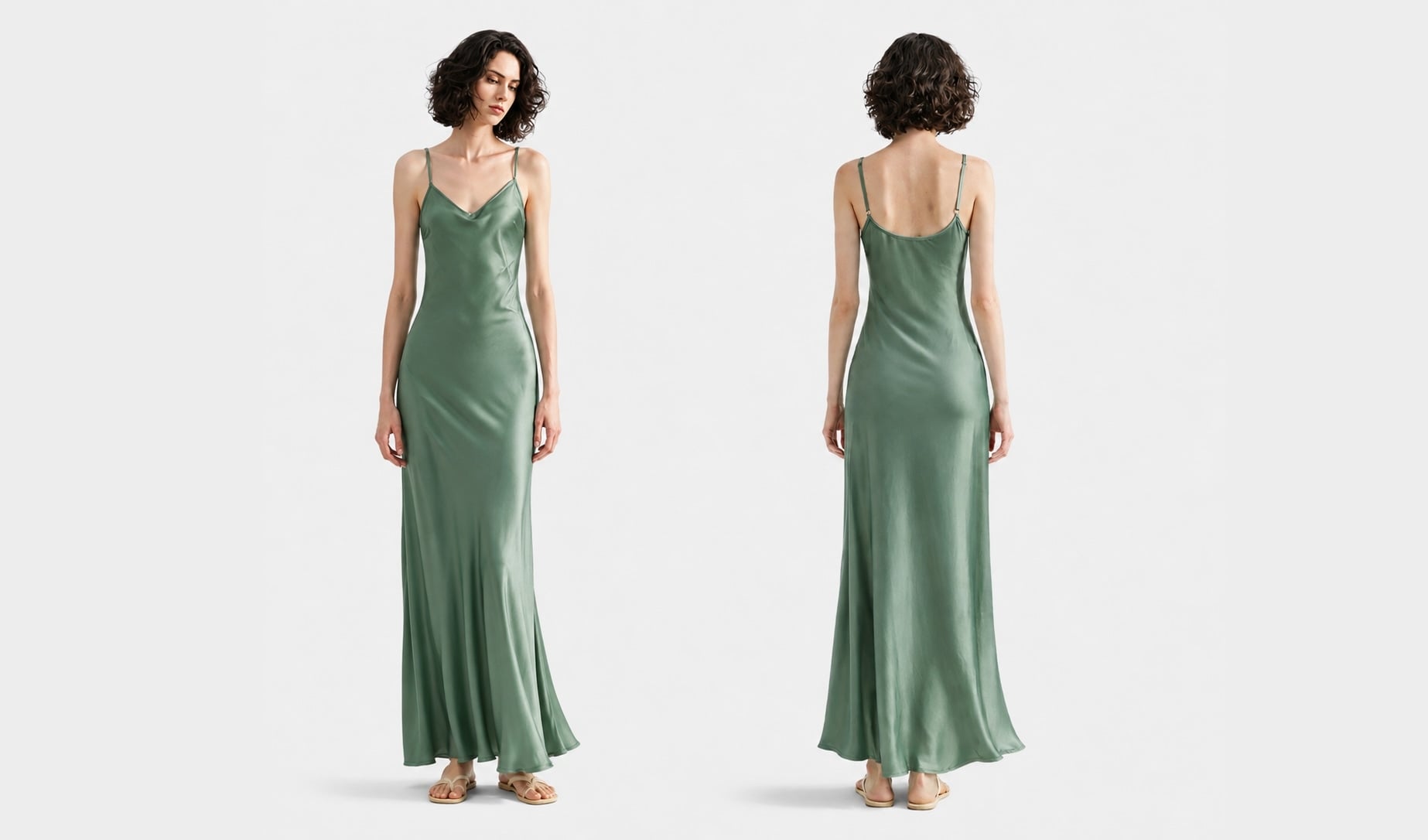
If you have ever shopped for a silk slip dress or had a silk nightdress made to measure, you may have come across the term “bias cut.” It simply means that the fabric is cut diagonally rather than straight along the grain. With silk, that small change can make a noticeable difference to how a dress sits, moves, and feels on the body.
What Exactly Is a Bias Cut?
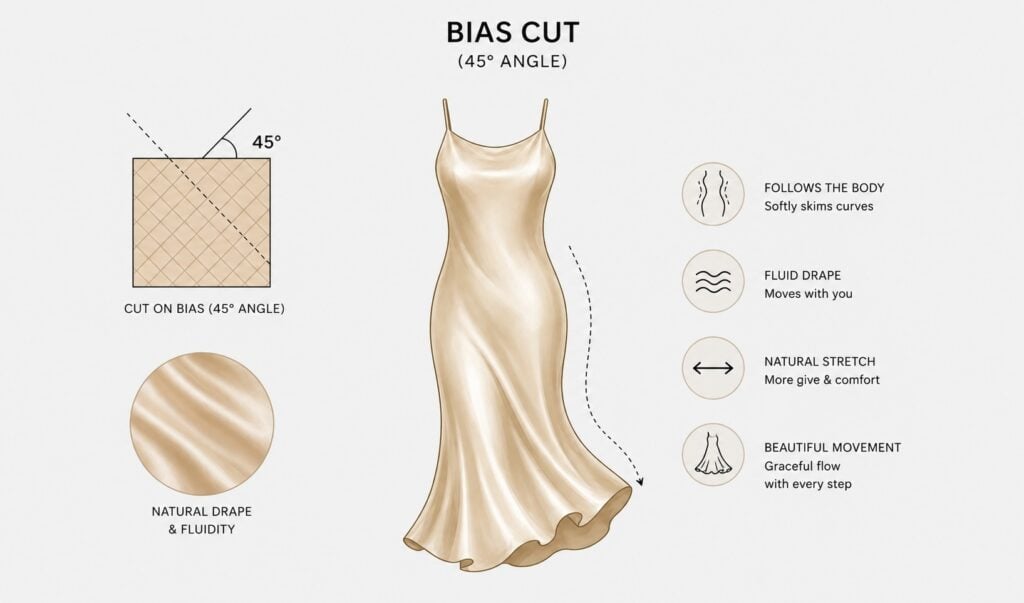
Most dresses are cut along the straight grain of the fabric, following the direction of the threads. A bias-cut dress is cut diagonally, usually at around a 45-degree angle.
Pure silk contains no elastane, but cutting it on the diagonal gives the weave a small amount of natural stretch. The threads have more freedom to shift against one another, making the fabric more flexible around the body.
This is why bias-cut silk behaves so differently from the same fabric cut straight.
Rather than dropping stiffly from the shoulders, it settles around the body, skimming the waist and hips without gripping them too tightly. A bias-cut slip can look almost plain on a hanger, yet once worn, the shape becomes much more apparent. The body provides the curves; the silk adjusts around them.
That soft, close drape is one of the reasons a simple bias-cut silk nightdress can look more refined than a far more complicated design.
Why Does Bias Cut Work So Well on Tall Women?
Tall women already have one thing that bias-cut silk loves: length.
On a taller body, there is more distance for the fabric to travel from shoulder to hip and from hip to hem. A conventional straight-cut dress has less flexibility through these changes in shape, so it can sometimes pull across the hips or create horizontal wrinkles around the waist.
Bias-cut silk has more freedom to adjust.
Under its own weight, the fabric naturally falls down the body while gently accommodating the waist and hips. Instead of visually dividing a tall figure into separate sections, it creates a cleaner, more continuous line from shoulder to hem.
Bias cutting works with height rather than trying to disguise it.
This becomes especially noticeable with longer slip dresses and silk maxi dresses. A tall frame gives the fabric enough space to develop its full drape, while the diagonal cut keeps the silhouette soft rather than rigid.
The result is not simply a woman who looks taller. Her proportions look more balanced, and the dress moves more naturally with her body.
Why Are Bias-Cut Silk Dresses More Expensive?
Part of the answer is surprisingly practical: they use more silk.
With a standard cut, pattern pieces can be arranged efficiently along the length of the fabric. Bias-cut pieces have to sit diagonally, leaving more unused space between them. Depending on the design and width of the silk, a bias-cut dress may require around 30% more fabric than a comparable straight-cut style.
It is also considerably harder to sew.
Once silk has been cut on the bias, it becomes more prone to stretching and shifting. If it is handled poorly, side seams can twist and a perfectly even hem can become uneven after the dress has been worn.
For this reason, a well-made bias dress is often allowed to hang and settle for 24 to 48 hours before the hem is finally levelled and finished. Gravity gives the bias areas time to stretch naturally, reducing the risk of the hem dropping unevenly later.
It is a small detail that you may never notice when buying the dress, but it tells you a lot about the workmanship behind it.
3 Things to Look for When Buying a Bias-Cut Silk Dress
1. Pay attention to Momme weight.
For a silk nightdress, 19 Momme is a good starting point. For a longer bias-cut dress, 22 Momme often gives a richer, more controlled drape. The additional weight helps the silk fall cleanly rather than feeling overly thin or flimsy.
2. Keep the design simple.
With bias cutting, the drape is already doing much of the design work. Heavy lace, excessive gathers, or too many decorative details can interrupt the clean line. A good bias-cut dress often needs very little beyond beautiful silk and precise construction.
3. Fold it rather than hanging it for months.
The same diagonal flexibility that allows the dress to mold beautifully to the body also means gravity can gradually stretch it in the wardrobe. For long-term storage, gently folding the dress and keeping it flat is usually the safer option.
Ultimately, bias cutting for tall women is not about trying to look taller. It is about making better use of the height you already have.
A longer frame gives silk more room to fall naturally, while the bias cut allows it to move around the waist and hips without interrupting that long vertical line.
The taller the frame, the more room the silk has to do what bias cutting was designed to do.