

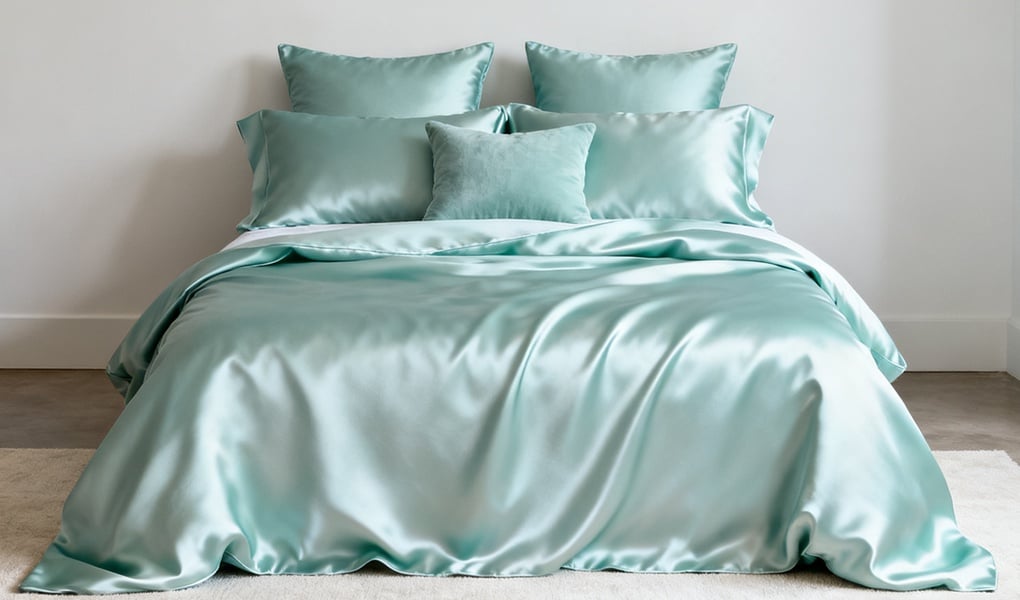
Silk bedding and cotton bedding are two common types of bedding materials, each with its unique characteristics and advantages. When it comes to breathability, silk bedding exhibits significant superiority, a conclusion supported by a series of comparative experiments. In this article, we will delve into the research findings, highlighting the exceptional breathability of luxury silk bedding.
Firstly, let’s explore the characteristics of silk bedding. Silk is a natural protein fiber derived from silkworms or other insects, and it possesses excellent breathability. The unique structure of silk fibers includes tiny pores that allow for unrestricted airflow. In contrast, cotton bedding, typically made from cotton fibers, also offers some breathability, but in comparison to silk, it has fewer and larger pores, resulting in inferior breathability.
To validate the superior breathability of silk bedding, we conducted a series of comparative experiments. Under identical environmental conditions, we laid silk bedding and cotton bedding separately and used the same measuring instruments to record indoor temperature and humidity. The results showed that the room with silk bedding had slightly lower temperature and slightly higher humidity compared to the room with cotton bedding during the same time period. This indicates that silk bedding facilitates better air circulation, aiding in body heat dissipation and sweat evaporation, resulting in a more comfortable sleeping environment.
Furthermore, we performed an experiment to evaluate perspiration efficiency. In a hot and humid environment, we simulated perspiration by applying liquid to mimic sweat on both silk and cotton bedding surfaces. The results clearly demonstrated that silk bedding exhibited significantly higher perspiration efficiency than cotton bedding. This can be attributed to silk’s superior moisture-wicking properties, allowing it to absorb sweat rapidly and facilitate swift evaporation, whereas cotton bedding showed a slight delay in moisture absorption and evaporation.
In addition to breathability, we also tested the comfort levels of both materials. Volunteers who slept on silk bedding generally reported better sleep quality, while some of those on cotton bedding expressed discomfort due to feeling stuffy and warm. This further confirms the superior breathability of silk bedding, providing a more comfortable sleep experience.
In conclusion, the experimental results unequivocally establish that silk bedding surpasses cotton bedding in terms of breathability. The natural protein fiber properties of silk confer it with unique breathable advantages, facilitating excellent air circulation, efficient moisture absorption, and quick evaporation, leading to a more comfortable sleep environment. Consequently, for individuals seeking high-quality sleep, silk bedding undoubtedly stands as the superior choice. Though silk bedding may come at a higher cost, its outstanding performance and long-lasting durability make it a worthwhile investment, offering sustained benefits to your health and sleep quality.