A custom silk tie begins with a well-prepared design. Beyond the colors and patterns themselves, the scale of each motif, the placement of a logo, and the proportions of the tie all influence its final appearance.
A pattern that looks balanced on a square canvas may appear quite different when arranged along the narrow, tapered shape of a necktie. Preparing the right artwork helps communicate these details clearly before production begins.
Two Design Files You Need for Custom Silk Ties
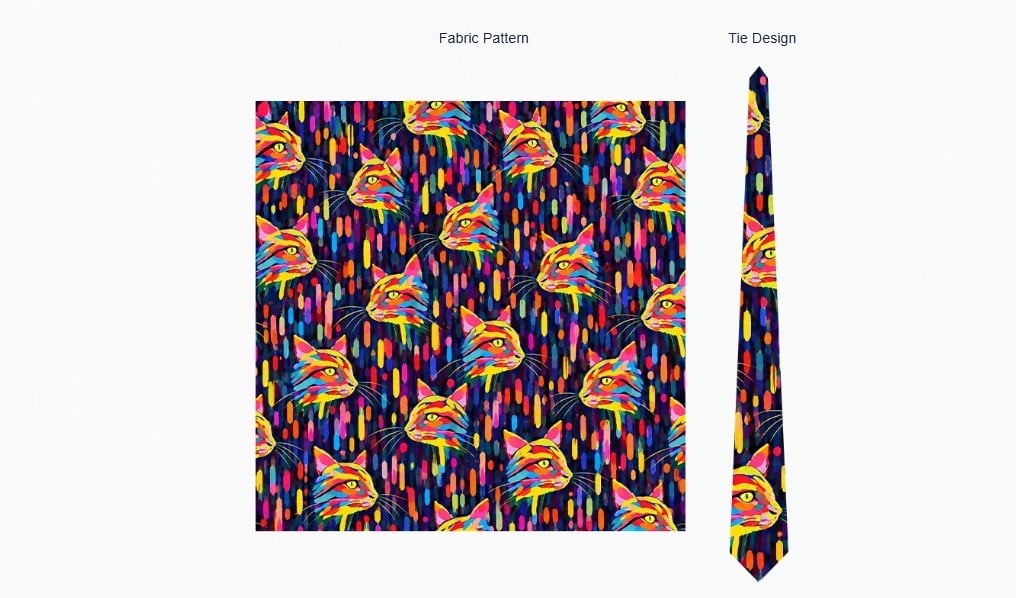
For custom silk tie production, we recommend providing two flat design files: a Fabric Pattern and a Tie Design. Both use the same artwork but serve different purposes. One presents the design details clearly, while the other shows how the artwork is arranged on the tie.
Fabric Pattern – Square Design
The Fabric Pattern is a square, flat artwork file used to display your design in high resolution. It provides a clear view of the colors, logos, lines, lettering, and other graphic elements.
Compared with a tie-shaped layout, the square format allows the original artwork to be viewed more clearly, making it easier to examine small details, precise outlines, and the relationships between different design elements.
You can download our Fabric Pattern Template and place your artwork directly into it.
Tie Design – Flat Tie Layout
The Tie Design is a flat illustration based on the actual shape of a necktie. It shows the position, scale, and overall arrangement of the artwork across the tie.
This layout should reflect your selected tie length and width. It is particularly important for positioned logos, stripes, and large illustrations, where the placement of individual elements influences the overall composition.
You can use our Tie Design Template to arrange your artwork according to your chosen tie dimensions.
Understanding Tie Width and Proportions
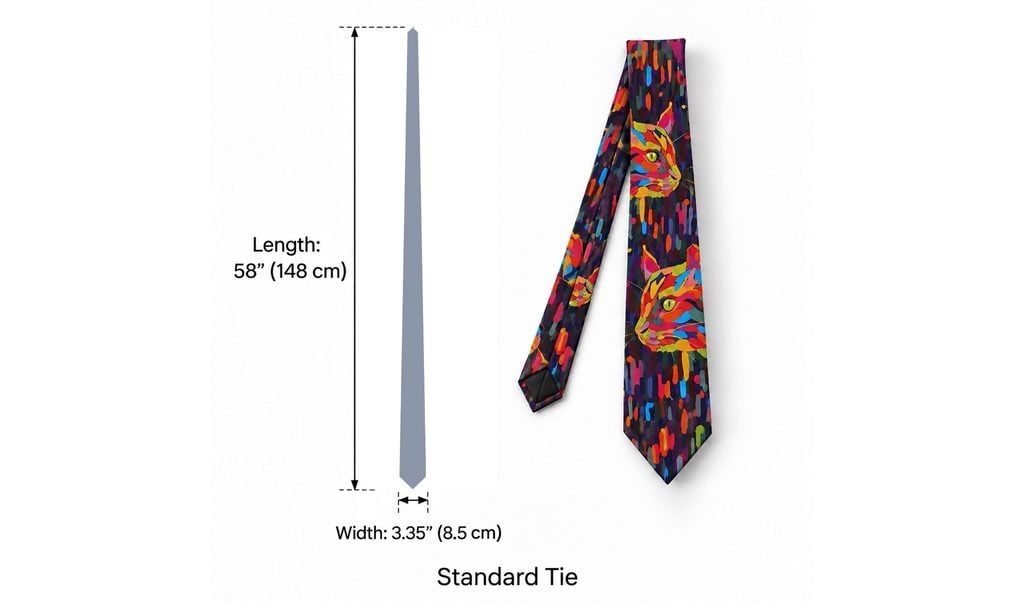
Tie width is measured across the widest part of the front blade, rather than the neck area or the narrow end.
Slim ties have a narrower front blade, creating a more streamlined silhouette, while standard ties offer a wider, more traditional proportion.
These differences also influence how patterns appear. A logo may occupy a larger proportion of a slim tie, while the same logo on a standard tie will have more surrounding space. Likewise, stripes and geometric patterns may appear differently as they follow the tapered outline.
Artwork Resolution and Recommended File Formats
The quality of your original artwork is particularly important for silk ties, where fine lines, small logos, and detailed patterns often play a significant role in the design.
We recommend editable vector formats such as AI, EPS, or vector PDF. Unlike pixel-based images, vector graphics retain their sharp edges and precise outlines when scaled. This makes them especially suitable for detailed logos, fine stripes, lettering, and geometric patterns where clean definition is essential.
PNG and JPG files can also be submitted, but they should be high resolution. We recommend 300 DPI at the intended artwork size, with sufficient pixel dimensions to preserve the original details.
A small image enlarged beyond its original resolution may lose definition, causing fine lines to appear jagged or small elements to become unclear. Simply changing an image’s DPI setting does not restore missing detail.
Color Accuracy and Custom Requirements
Color is an essential part of a tie’s visual identity. A subtle contrast between a background and its pattern can create a restrained, elegant composition, while stronger color combinations give the design a more prominent appearance.
Your artwork should therefore display the actual colors you intend to use. You can also include additional color instructions in the Custom Requirements section. Whether you have a particular shade in mind or specific color details that need attention, these references help us verify the intended colors during production.
Don’t Have Professional Artwork? We Can Help
You don’t need to have a complete design file to begin your custom silk tie project. Some customers start with a company logo, while others have a reference image, a preferred color combination, or simply an idea for the overall style.
Our Tie Image Design Service can help turn these materials into the Fabric Pattern and Tie Design files needed for your project.
Ready to Submit Your Design?
Upload your artwork online and place your order for a custom silk tie designed just for you.