
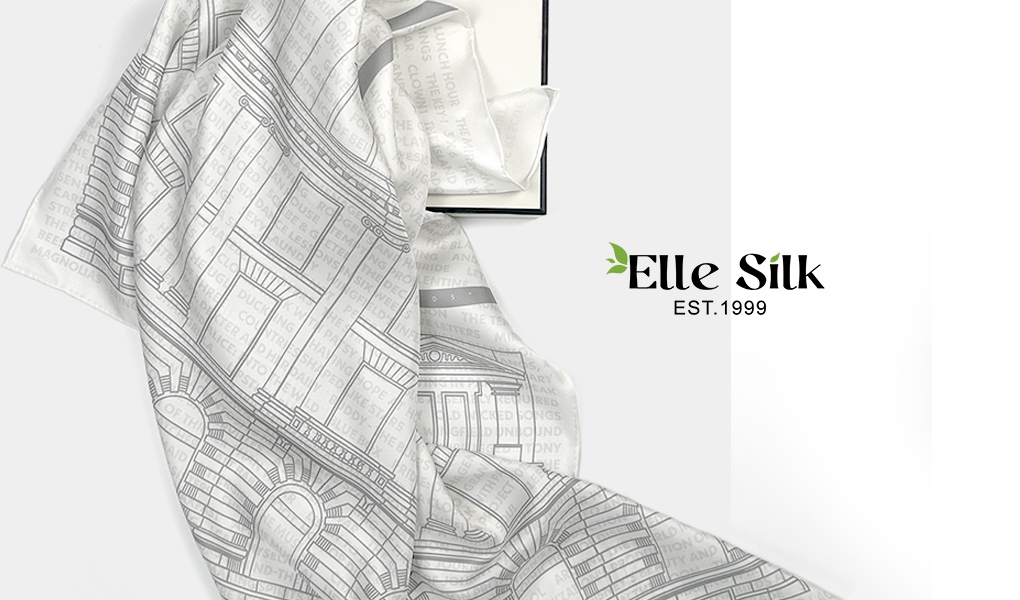
Custom silk scarves are classic and fashionable accessories that add a touch of elegance to any outfit. Customizing silk scarves has become popular to meet individual preferences. In the customization process, both the printing method and the edge finishing technique play crucial roles, directly impacting the appearance, texture, and quality of the scarves. In this article, we will compare digital printing and screen printing for customized silk scarves, as well as hand-rolled edges versus machine-finished edges.
Digital Printing vs. Screen Printing
- Digital Printing: Digital printing is a technique that uses computer-controlled nozzles to directly apply ink or dye onto the silk fabric. Its main advantage lies in its ability to achieve highly personalized designs, allowing intricate patterns, images, or color details to be directly printed onto the scarf. This makes digital printing ideal for small-batch production or individual customization with relatively short production cycles. Additionally, digital printing excels in displaying color gradients and transitions.
However, digital printing tends to be more expensive compared to screen printing. The specialized equipment and inks involved contribute to higher production costs. Moreover, color fastness and durability might be slightly inferior to screen printing, as prolonged use and washing can lead to color fading.
- Screen Printing: Screen printing is a traditional technique where ink is applied to the fabric through a mesh screen stencil. Its advantages include lower production costs, making it suitable for large-scale production. Screen printing also offers superior color fastness and durability, resulting in long-lasting scarves.
However, screen printing has design limitations, especially when it comes to intricate patterns and color gradients. The process of creating screen stencils can be time-consuming and costly, making it less suitable for small-batch or personalized production.
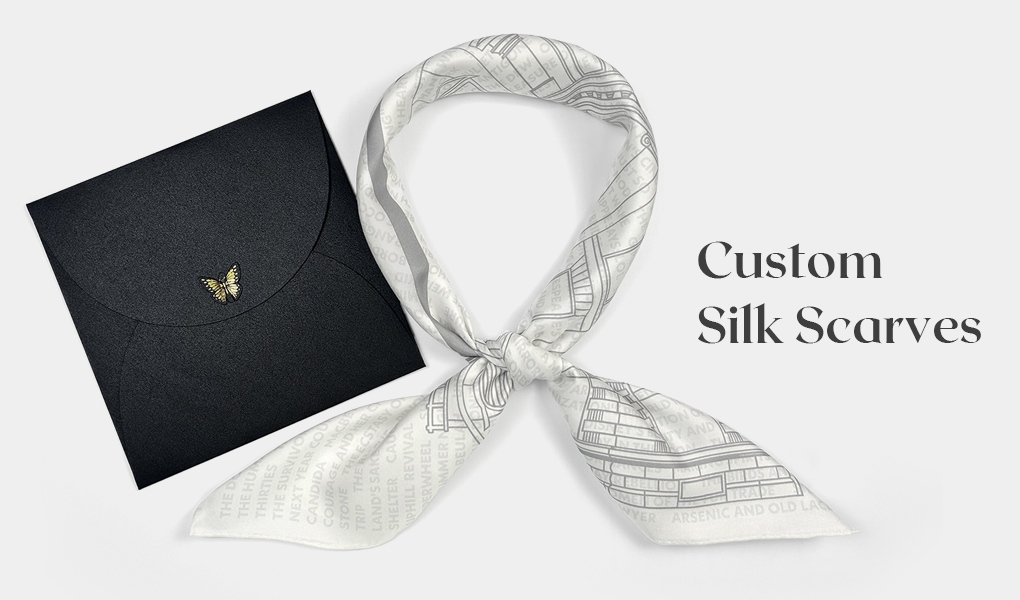
Hand-Rolled Edges vs. Machine-Finished Edges
The edge finishing of silk scarves can be done through either hand-rolling or machine-finishing methods.
- Hand-Rolled Edges: Hand-rolling is a traditional craftsmanship where skilled artisans meticulously roll the edges of the scarves by hand, creating a smooth and refined finish. The greatest advantage of hand-rolled edges lies in their precision and aesthetics. Craftsmen can adjust the width and density of the rolled edge to achieve an exquisite look, giving the scarves a unique and luxurious feel.
However, hand-rolling is a time-consuming and labor-intensive process, which may result in higher production costs. Due to its manual nature, it also adds a touch of individuality to each scarf, making it more exclusive.
- Machine-Finished Edges: Machine-finishing, on the other hand, uses automated machinery to quickly and uniformly finish the edges of the scarves. The main advantage of machine-finishing is its efficiency and consistency, maintaining high production rates for both large-scale and small-scale operations.
Yet, machine-finishing lacks the intricate details and personalized touch that hand-rolled edges offer. The edges may appear simpler and less refined due to the limitations of automated processes.
Conclusion
Whether choosing digital printing or screen printing, hand-rolled edges, or machine-finishing, each technique has its unique advantages and suitable applications. When customizing silk scarves, it is essential to consider specific needs and budget constraints to ensure the final product beautifully embodies personalized designs and top-notch craftsmanship.