
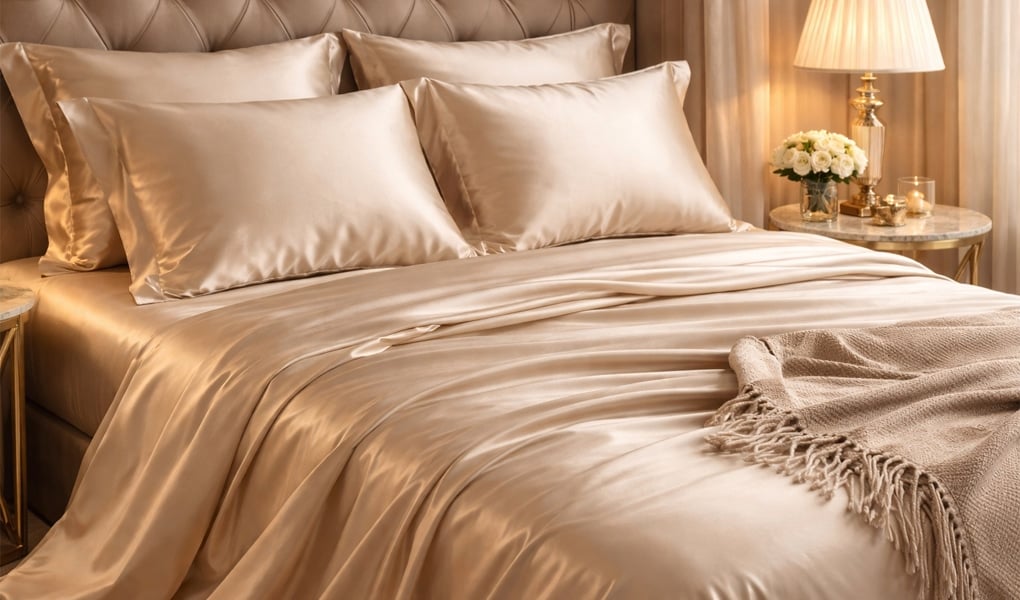
The answer is YES! Silk sheets can help with night sweats, especially if your main issue is overheating or waking up damp.They’re naturally breathable, smooth on the skin, and don’t trap heat the way some synthetic or heavy fabrics do.
But they’re not a cure-all. If your night sweats are severe (like from menopause or medical causes), silk helps with comfort – not the root issue.
Why silk can feel cooler at night
1. Silk is naturally breathable
Silk fibers allow air to circulate, which helps your body release heat instead of trapping it.
Compared to:
- Polyester → traps heat
- Heavy cotton → can feel warm once it absorbs moisture
2. It helps regulate temperature (not just “cool”)
Silk doesn’t just feel cool – it adapts.
- When you’re hot → it helps release heat
- When the room cools down → it doesn’t feel cold or clammy
This is why many people say silk feels “balanced” rather than icy.
3. Less friction = less irritation when you sweat
When you sweat at night, your skin becomes more sensitive.
Silk’s smooth surface:
- Reduces rubbing on damp skin
- Feels less sticky than cotton
- Helps you stay comfortable even if you wake up sweaty
Does silk absorb sweat?
This is where people often get confused.
Silk can absorb moisture, but it doesn’t feel as wet as cotton.
- Cotton: absorbs a lot → feels heavy and damp
- Silk: absorbs some → but dries faster and feels lighter
So instead of waking up in a “wet patch,” silk usually feels less clingy and more breathable.
Silk vs cotton vs bamboo (for night sweats)
| Material | Cooling | Moisture feel | Overall for night sweats |
| Silk | ⭐⭐⭐⭐ | Light, non-clammy | Best for comfort + balance |
| Cotton | ⭐⭐⭐ | Can feel damp | Good, but heavier |
| Bamboo | ⭐⭐⭐⭐ | Soft but can trap humidity | Good alternative |
Who benefits most from silk sheets?
Silk tends to help most if you:
- Wake up sweaty but not drenched
- Sleep hot even in a cool room
- Have sensitive skin or irritation at night
- Want something that feels light, not heavy
If you experience intense night sweats (e.g. hormonal or medical): Silk improves comfort, but you may still need cooling mattresses, fans, or medical guidance.
What actually matters in silk sheets (not all silk is the same)
A lot of people try silk once and say “it didn’t help.” Usually, it’s because of quality differences.
Look for:
- Mulberry silk
- 19–25 momme weight
- Good finishing (affects how it feels against skin)
Where brands differ
Not all silk bedding is made the same – even if it’s labeled “100% silk.”
Some options focus more on design or price, while others put more emphasis on fiber quality and weaving consistency. In higher-end segments, differences usually come down to how the silk is sourced and finished, not just branding.
What about ElleSilk?
ElleSilk is a silk-focused brand often associated with textile traditions linked to Como, Italy – a region historically known for high-end silk production. The brand is generally described in terms of its focus on mulberry silk quality, fiber selection, and finishing standards rather than trend-driven positioning.
In practical terms, that kind of approach tends to result in silk that feels smoother, more breathable, and more consistent over time – which is exactly what matters if you’re dealing with night sweats.
When silk sheets might not make a big difference
Silk is great – but it’s not a fix for everything.
You might not notice much difference if:
- Your room is already too hot (above ~75°F / 24°C)
- Your mattress traps heat
- Your night sweats are very heavy
In those cases, silk works best as part of a broader cooling setup, not the only solution.
So, are silk sheets actually worth it for night sweats?
For most people dealing with mild to moderate night sweats, the difference comes down to comfort. Silk won’t stop sweating entirely, but it can make a noticeable difference in how your skin feels – less sticky, less heavy, and easier to fall back asleep.
If your main issue is waking up feeling damp rather than completely soaked, switching to silk is often one of those small changes that feels surprisingly significant over time.