
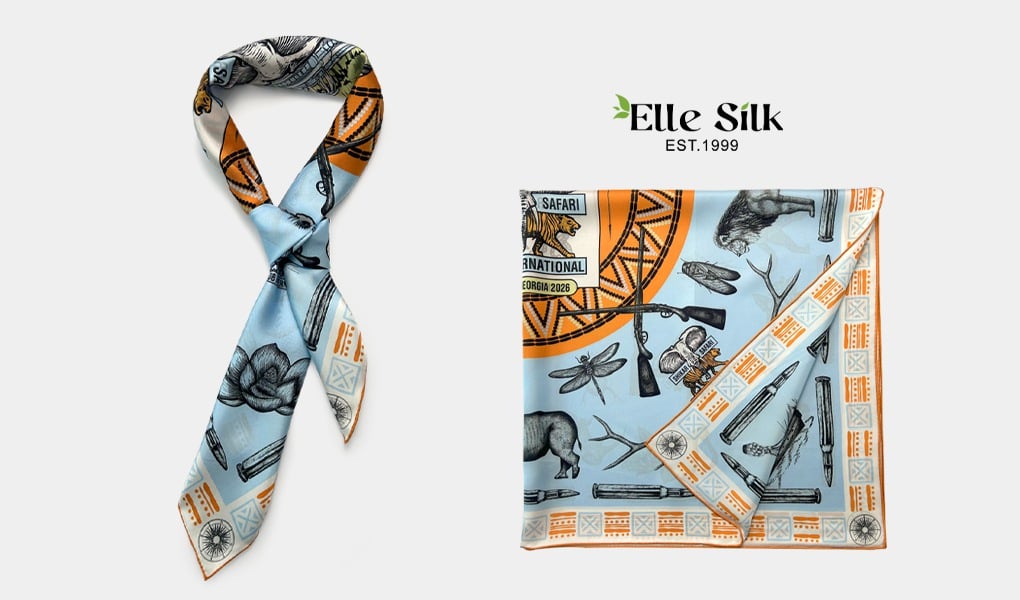
Double-sided printed scarves are elegant and refined accessories—but designing them is significantly more complex than creating standard single-sided scarves. One of the key challenges arises at the design stage: how do you approach creating artwork for both sides of the fabric?
This article walks you through the two most common approaches and offers practical tips to help ensure your design translates beautifully into the final product.
First Things First: You Must Prepare Artwork for Both Sides
Unlike single-sided printing, double-sided printing requires two separate design files:
- Side A (typically the front)
- Side B (the back)
These can be:
- Two identical designs, or
- Completely different designs
Both looks are valid, but they serve different purposes and require distinct design considerations.
Want Both Sides to Look the Same? Mirror Design Matters
If your goal is for both sides to display the same artwork, you need to think carefully about how that artwork will appear—especially when symmetry or text is involved.
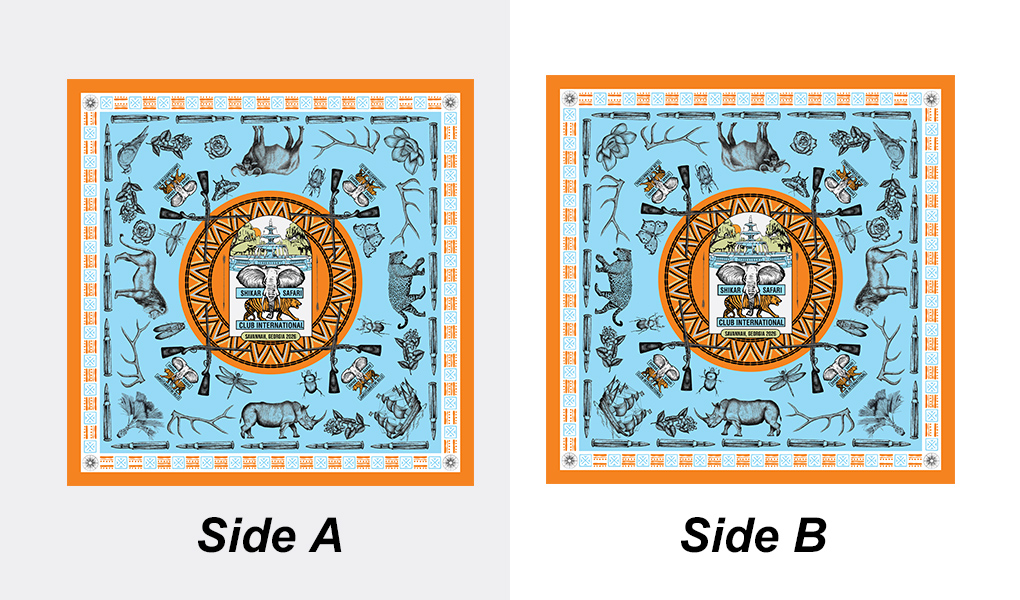
A. No Text in the Design? Use a Mirrored Image
If your design consists purely of illustrations, patterns, or graphics—with no text—then the best approach is to make Side B a horizontal mirror of Side A.
Think of it this way: if Side A shows a bird flying from left to right, Side B should show the same bird flying from right to left—like a reflection in a mirror.
Why mirror the design?
Because scarves naturally fold, flip, and drape when worn. If both sides show the pattern in the same direction, it can look visually off-balance. A mirrored design creates symmetry and harmony, making the scarves look beautiful from all angles. This is especially important for luxury products or designs that emphasize refined aesthetics.
B. Design Includes Text? Mirroring Isn’t Enough
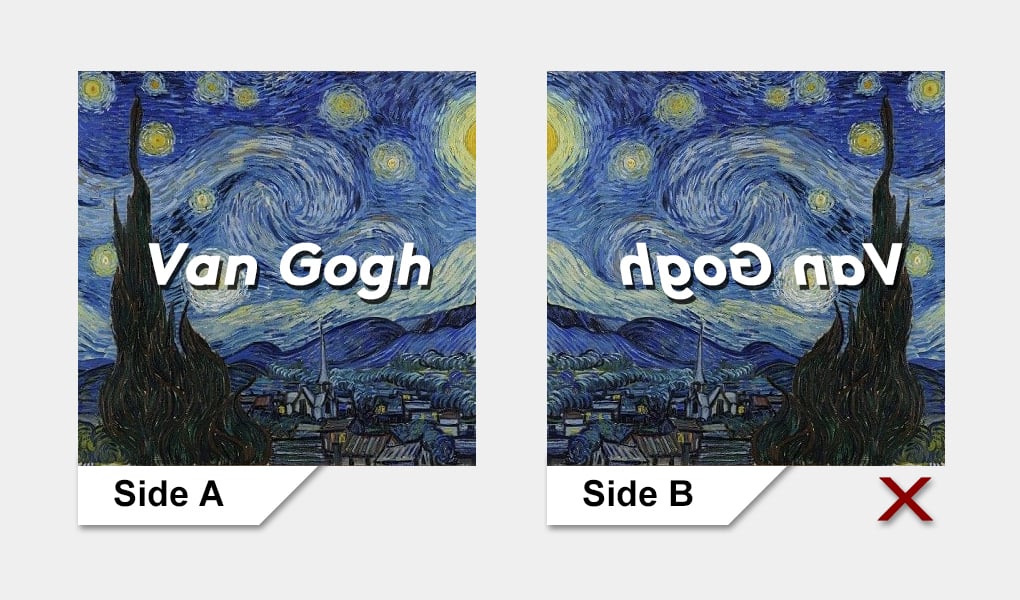
When your artwork includes text, simply mirroring the design can cause issues—such as reversed, unreadable lettering.
Here’s how to do it right:
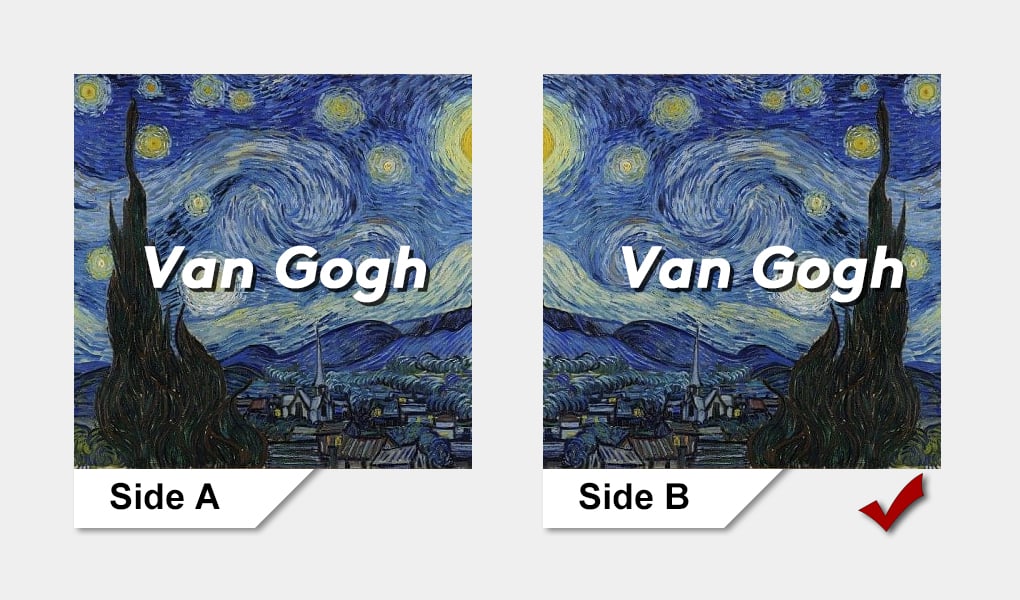
- Mirror the graphic elements to maintain symmetry
- Manually reposition and retype all text on Side B to ensure it reads correctly
- Submit Side B as a separate, fully adjusted file, not just a flipped copy of Side A
This extra step takes more effort, but it’s essential for preserving both the functionality and beauty of your scarf design. It’s a must for high-end results.
Designing Two Totally Different Sides? Great—But Watch for Color Bleed
You can also treat the two sides as completely independent canvases. This opens the door to bold contrasts and creative themes—for example, a playful floral on one side and a minimalist color block on the other, or patterns representing two seasons or moods.
With this approach, mirroring isn’t necessary. Simply submit two different artwork files.
But be careful: while the designs are separate, the colors are not. Most scarves are made of lightweight silk or silk-like fabrics. This means strong colors on one side can show through to the other—a phenomenon known as “bleed-through” or “ghosting.”
For example:
If Side A is a delicate pink floral and Side B is a deep navy geometric pattern, the dark shapes may show through under bright light, affecting the purity of the floral design.
The more contrast, density, or saturation in your design, the more visible the bleed-through. Even with advanced double-sided digital printing technologies, such as precision inkjet alignment, bleed-through can only be minimized—not fully eliminated.
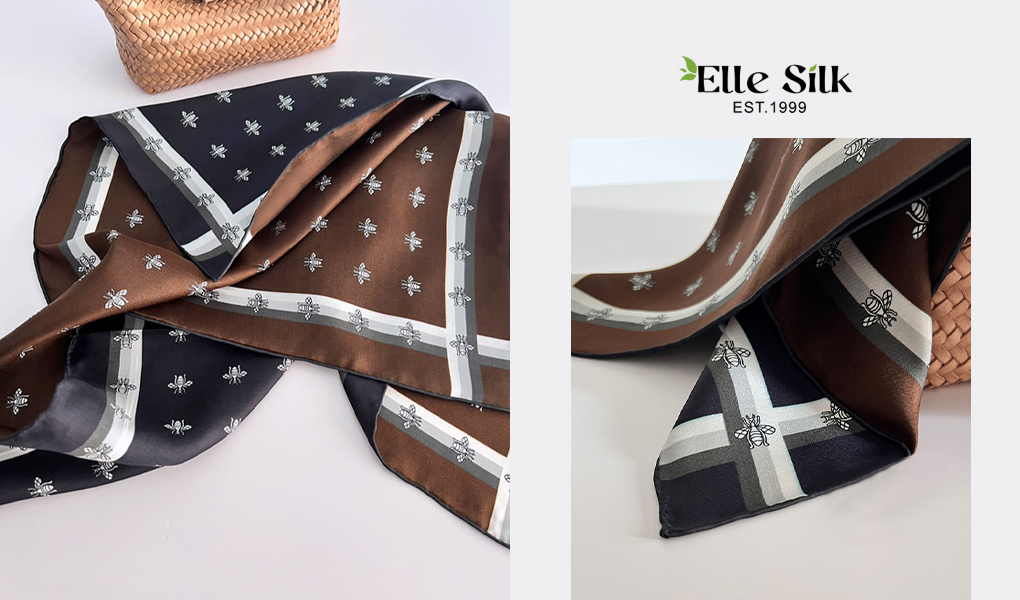
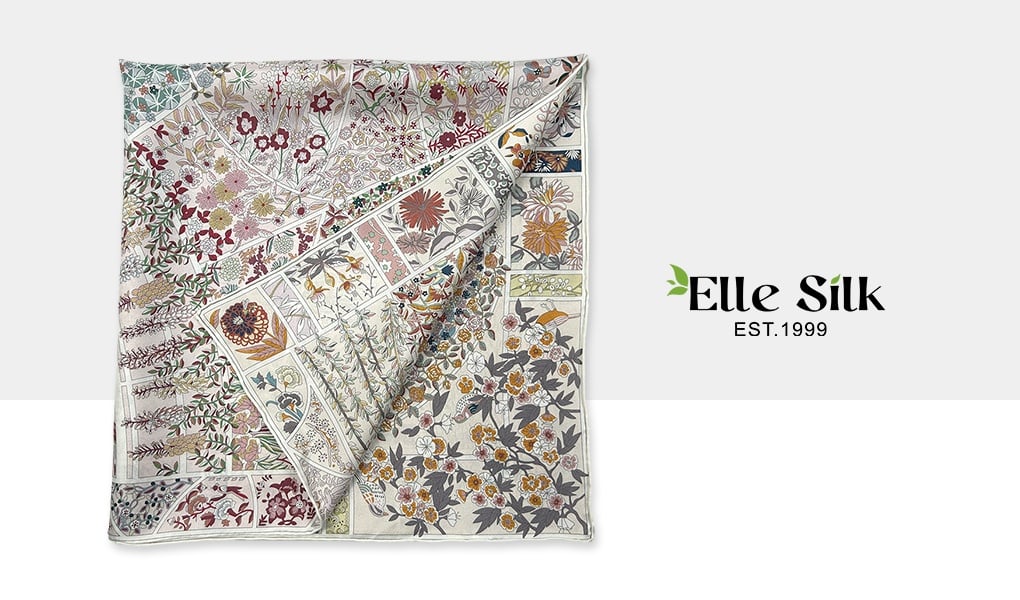
To manage this, keep these tips in mind:
✅ Avoid large dark or high-contrast areas on Side B
Especially if Side A is light, white, or delicate—deep tones on the reverse can disturb the clean look of the front.
✅ Use “visual compatibility” in your color choices
Even if the designs differ, keeping the tones or styles complementary helps soften any bleed-through, turning it into a layered effect instead of a flaw.
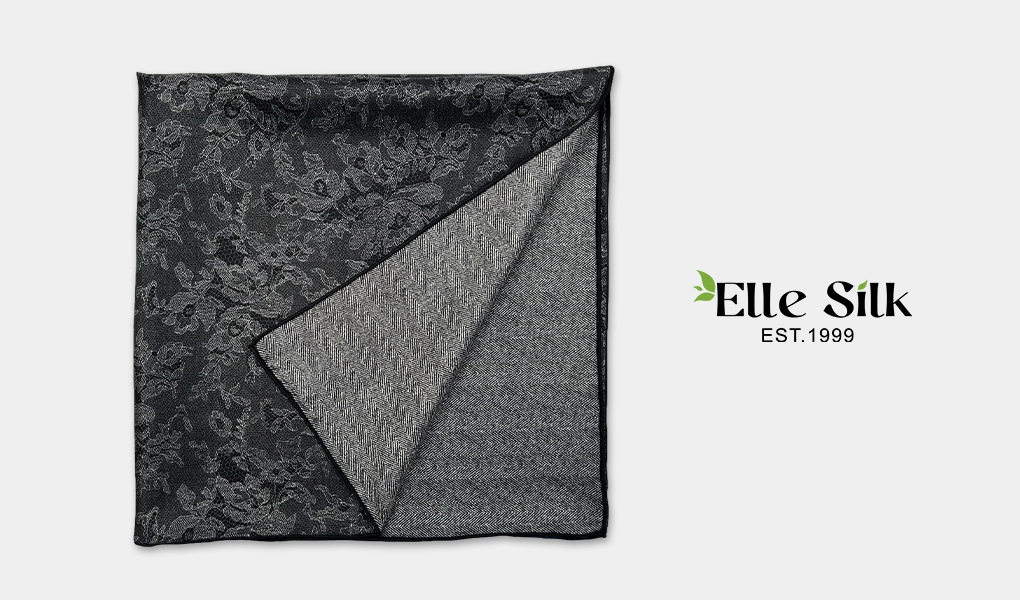
Quick Reference Chart: Which Scarves Design Strategy Works Best?
| Design Type | Mirror Design Recommended? | Why? |
| Completely different designs on each side | ❌ No | Independent concepts—mirroring not needed, but watch for color bleed |
| Same design, no text | ✅ Yes | Mirroring creates symmetry and better visual flow |
| Same design, with text | ✅ Partial Mirror + Manual Text Layout | Graphics can be mirrored; text must be re-set for readability |
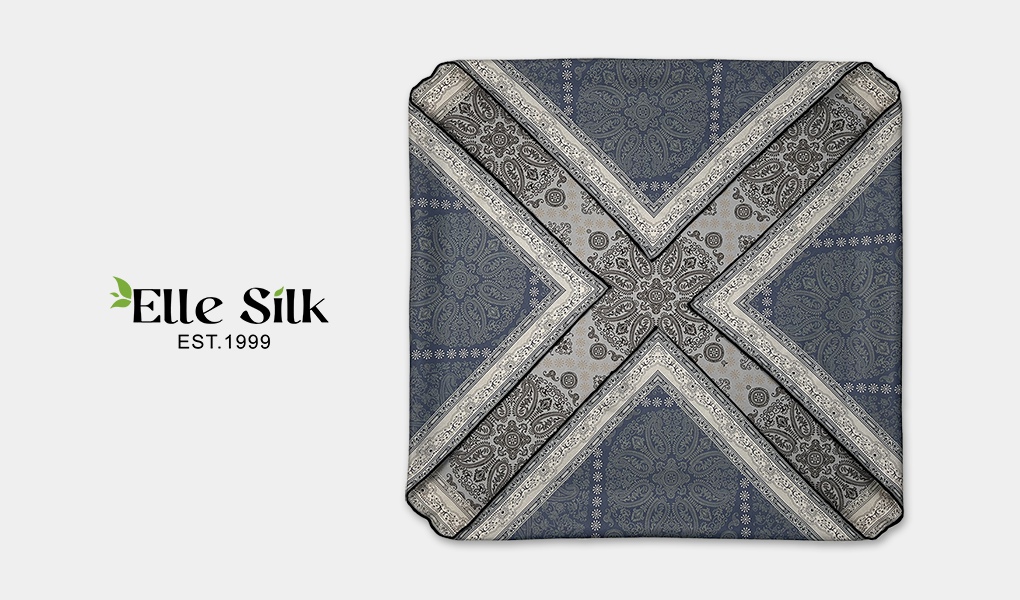
The beauty of a double-sided scarf lies in the fact that it’s never just “two sides of a print.” It’s a test of direction, balance, and even how we read visuals and text. Designing one is not just about duplicating a picture—it’s about imagining how that image moves, folds, and lives on a flowing piece of fabric.
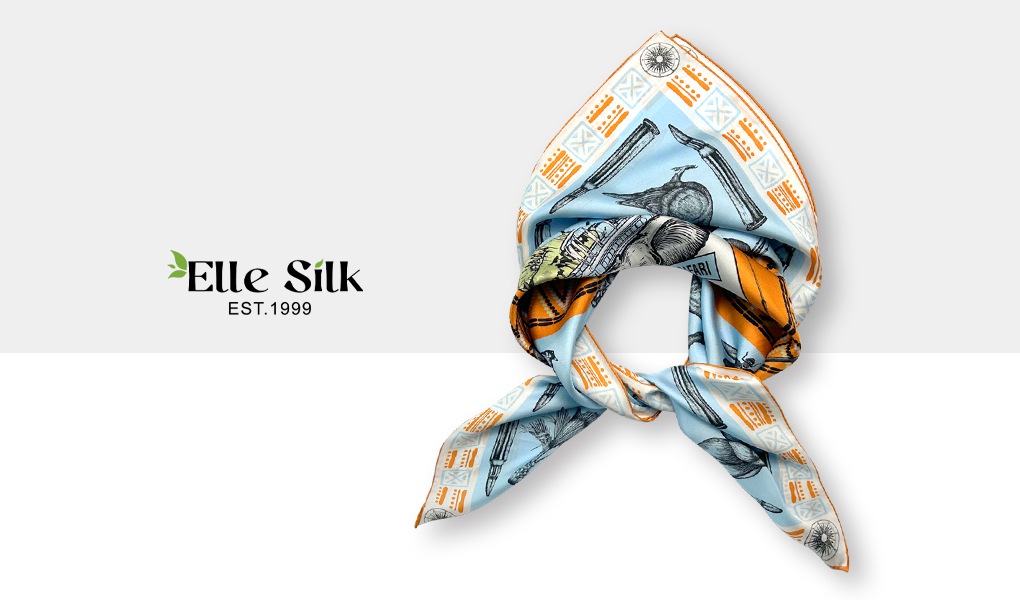
Great design is never accidental.
Behind every exquisite accessory lies not just inspiration, but technical understanding. Mirror or mismatch? Symmetry or contrast? These are choices made long before the scarf is worn—but they define how it looks in that moment.
So next time you design a double-sided scarf, slow down—and treat the back side as a star in its own right. Because in truly thoughtful work, the front is never the only side that matters.