
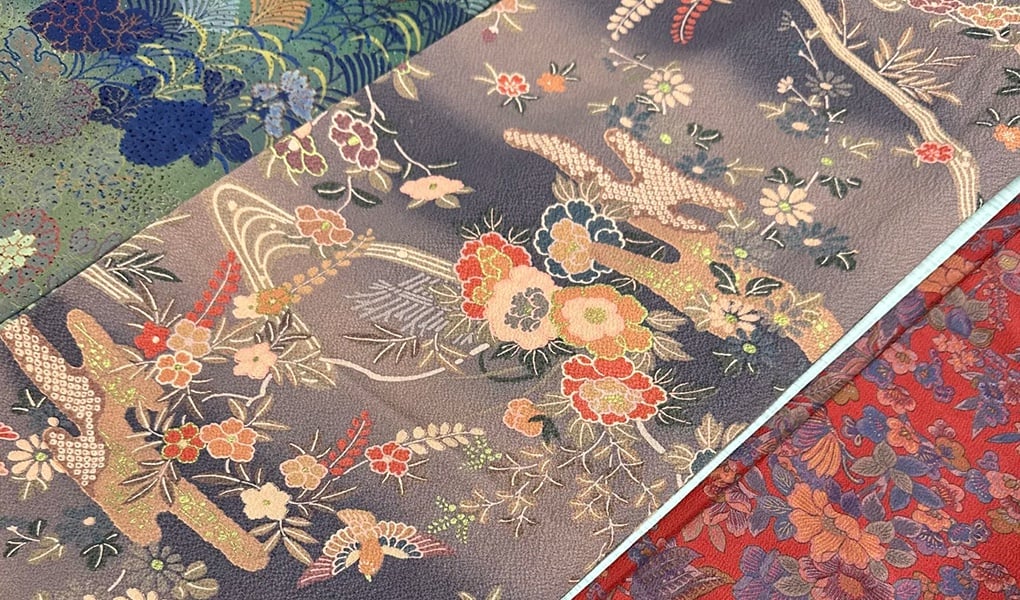
In the world of traditional Japanese textiles, few things are as quietly powerful as a bolt of silk fabric known as a tanmono. Unassuming in form — a long, narrow roll of cloth — the tanmono holds within it centuries of craft, regionally rooted techniques, and the unmistakable elegance of Japanese aesthetics.
At the heart of the finest tanmono lies one shared trait: the use of seiken, or pure silk. This term doesn’t refer to how the fabric is woven, dyed, or worn — it refers to what it’s made from. True seiken fabric is woven entirely from raw silk filaments, with no blends, no shortcuts. It is silk in its most refined, uncompromised state.
Among the many weaves and textures that fall under the umbrella of seiken, tanmono such as Habutae and Tsumugi stand out as two of the most iconic — yet entirely different — expressions of Japanese silk artistry.
Habutae is silk in its most classical form. Smooth, lustrous, and feather-light, it is often described as the Japanese answer to satin, though its hand is far more subtle. Woven using a plain weave technique and often employing a method called nureyoko, where the weft yarns are slightly dampened before weaving, Habutae achieves a dense yet flowing drape that seems to breathe light. Traditionally favored for linings and formal kimono, it remains a symbol of refinement and precision.
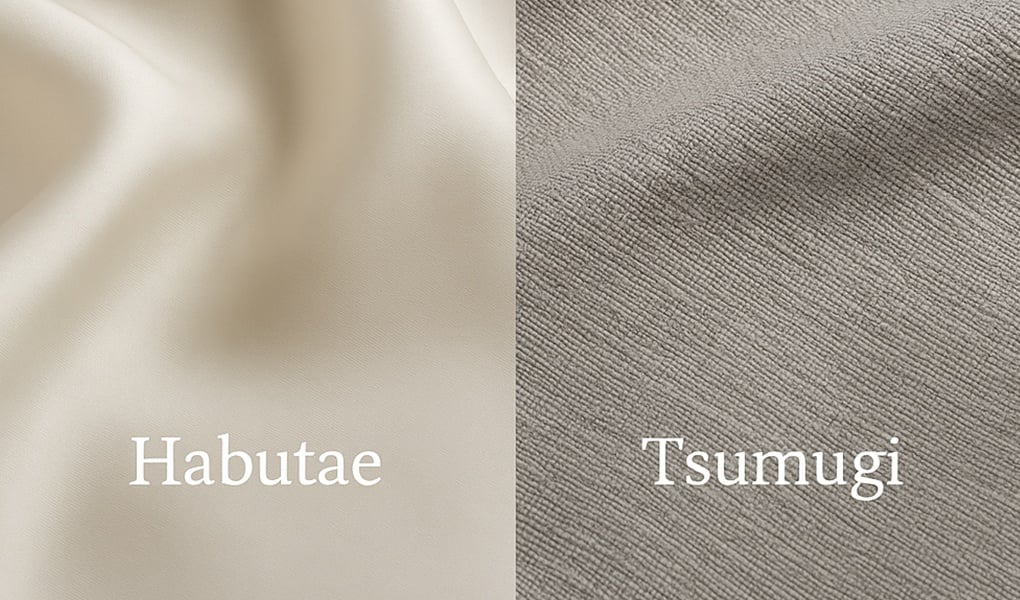
By contrast, Tsumugi speaks with the voice of handcraft and rustic elegance. It is often woven from hand-reeled silk threads that retain slight irregularities — intentional slubs that give the fabric character and depth. Tsumugi often features kasuri (ikat-like) patterns, created through painstaking pre-dyeing of the threads before weaving. While some versions of Tsumugi qualify as seiken due to their raw silk content, they wear their imperfection with pride. These are textiles with texture, body, and soul — preferred for high-end casual wear, collectors’ pieces, and kimono that express personality rather than formality.
Understanding the difference between these two types — the polished whisper of Habutae and the earthy sincerity of Tsumugi — is key to appreciating the range of expression within seiken silk. But texture is only the beginning.
Behind each bolt of fabric lies a tapestry of craftsmanship. Habutae’s gleam isn’t simply the result of good raw silk; it comes from meticulous warp density, ultra-fine yarns, and exacting tension control at the loom. Some workshops still beat the finished fabric by hand with wooden mallets — a process known as kinuta-uchi — to soften the fibers and increase their luster.
Tsumugi, on the other hand, may go through entirely different rituals. In the southern islands of Japan, artisans creating Ōshima Tsumugi submerge their fabrics in a mix of iron-rich mud and fermented plant dye, a technique called dorozome that yields deep, warm blacks and browns with a unique matte glow. In the city of Yuki, weavers work on traditional jibata (ground looms), producing the famously soft and lightweight Yūki Tsumugi — a national intangible cultural heritage.
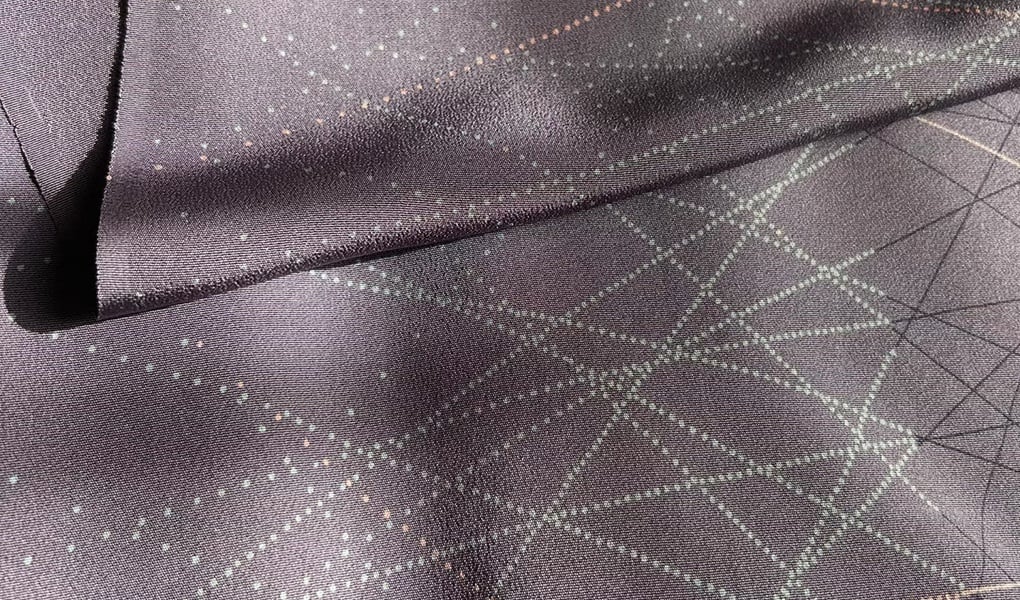
Then there is the dyeing. Seiken fabrics often serve as canvases for Japan’s most exquisite dye techniques, particularly the celebrated art of Kyō-Yūzen. Here, motifs are drawn by hand, resisted with rice paste, carefully dyed, steamed, washed, and detailed over many steps — sometimes requiring multiple artisans working across weeks or months. The Kyoto-based atelier Chiso, founded in 1555, remains one of the most respected houses in this tradition. A single furisode (long-sleeved formal kimono) from Chiso may involve more than 200 hours of combined dyeing and painting work.
It’s not just the technique, but the philosophy, that elevates these textiles. As one Kyoto weaver once said, “We do not simply weave cloth. We weave time, memory, and light.”
Several regions in Japan continue to uphold these traditions through storied weaving houses and family-run ateliers. In Kyoto’s Nishijin district, companies like Kawashima Selkon and Tatsumura Art Textile are known for their woven masterpieces — obi and fabrics that look almost embroidered, made with double-weave jacquard looms. The modern brand HOSOO has pushed Nishijin silk into contemporary design and architecture, proving that tradition and innovation need not be at odds.
Outside Kyoto, Kanai Kōgei in Amami keeps the flame of mud-dyed Ōshima Tsumugi alive, while Okujun in Yuki continues to produce hand-loomed tsumugi using silk threads as fine as a whisper.
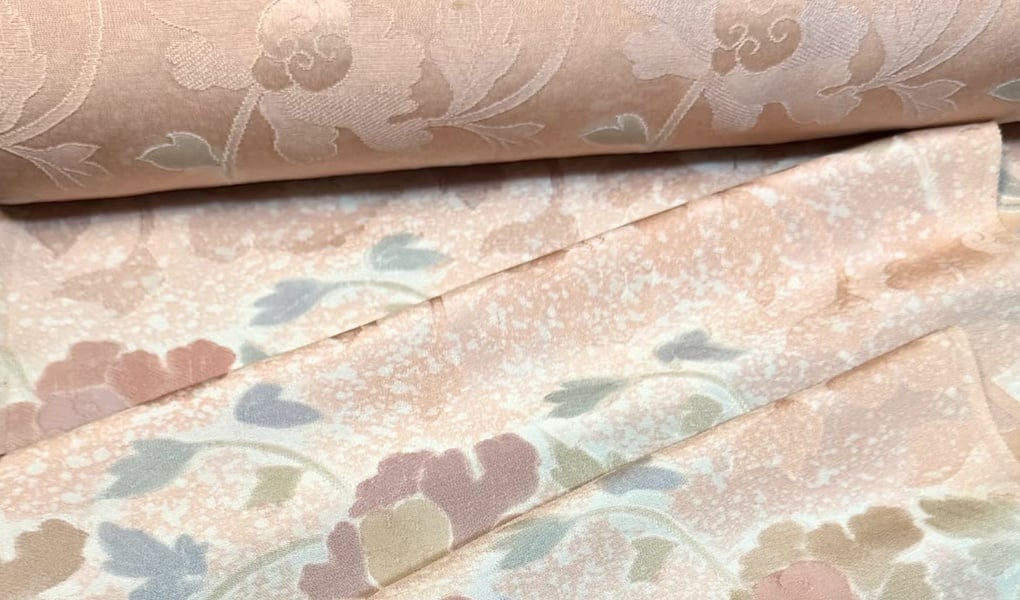
For collectors, kimono wearers, or simply lovers of textiles, recognizing quality in seiken silk requires more than a glance. True Habutae should have a soft, wet sheen — not synthetic shine — and fold without producing visible crease lines. Tsumugi, meanwhile, should feel dry yet supple, its texture revealing the artisanal intention behind every thread.
Many bolts come with official certification: Nishijin, Yūki, Ōshima, and other regions issue woven-edge seals or paper documentation verifying origin and maker. These marks, often overlooked by casual buyers, are a gateway into understanding the provenance and value of the fabric.
To hold a bolt of seiken silk is to hold a thread of history. Each piece is more than fabric — it is a quiet testament to time, hand, and heritage. Whether you are drawn to the gleaming elegance of Habutae or the tactile poetry of Tsumugi, Japanese silk tanmono offers something rare in our fast world: a story worth unfolding, slowly, one thread at a time.
Available in other languages:
- 日本語 (Japanese):https://www.ellesilk.com/blog/ja/seiken-tanmono-habutae-tsumugi/
- Français (French):https://www.ellesilk.com/blog/fr/soie-japonaise-tanmono-habutae-tsumugi/
- Deutsch (German):https://www.ellesilk.com/blog/de/japanische-seide-tanmono/
- Español (Spanish):https://www.ellesilk.com/blog/es/seda-japonesa-tanmono-habutae-tsumugi/