
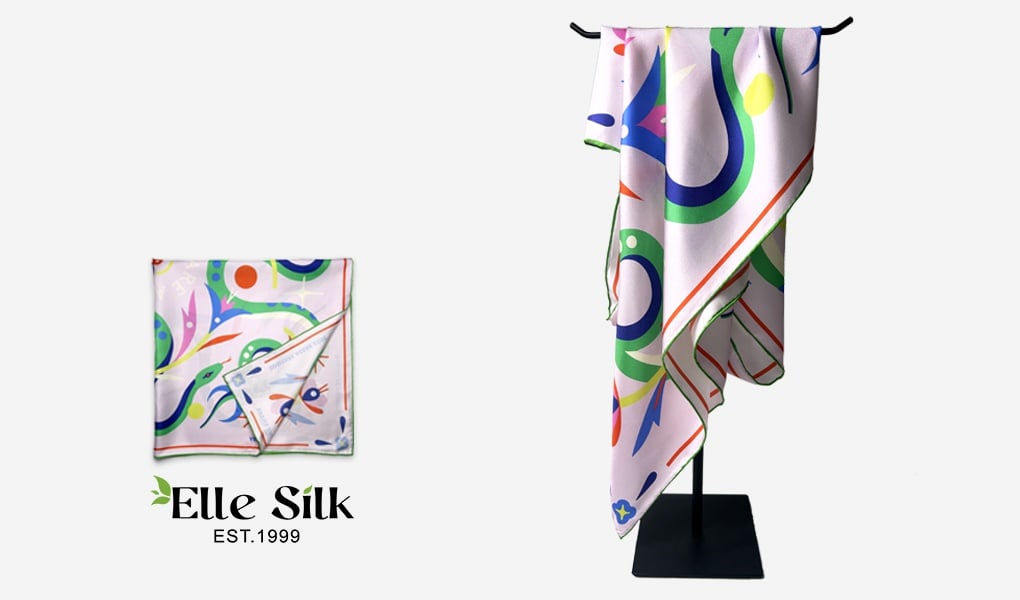
Luxury brands such as Hermes often choose to use silk twill instead of plain satin for their scarves due to the former’s superior texture, sheen, softness, durability, and elasticity. Twill silk has a more obvious diagonal weave pattern that creates a unique luster and reflection under light, while plain satin has a smoother surface. Twill silk also has a tighter yarn weave, which makes it more durable and less prone to wrinkles and abrasions.
Twill silk is widely used in the creation of silk scarves due to its exceptional qualities and versatility. Its usage extends beyond just luxury brands like Hermes, making it a popular choice among designers and fashion enthusiasts alike.
One of the key advantages of twill silk in scarves is its ability to hold intricate designs and patterns with remarkable clarity. The diagonal weave pattern of twill silk creates a dynamic backdrop that enhances the visual impact of prints, whether they are vibrant colors, delicate motifs, or intricate illustrations. This allows designers to unleash their creativity and produce visually stunning scarves that are true works of art.
Furthermore, twill silk’s inherent durability and resilience make it well-suited for scarves, ensuring they withstand the test of time. The tightly woven fibers provide strength and resistance against everyday wear and tear, maintaining the pure silk scarf‘s integrity even with regular use. This durability ensures that twill silk scarves remain a cherished accessory for years, serving as a timeless fashion statement that can be passed down through generations.
In summary, the widespread use of twill silk in luxury scarves is attributed to its ability to showcase intricate designs with clarity and its exceptional durability. The combination of its visually appealing diagonal weave pattern and long-lasting quality solidifies twill silk as the fabric of choice for creating luxurious and enduring scarves.