

In the realms of fashion and home textiles, the terms “100% Mulberry silk” and “100% silk” are often used interchangeably; however, a deeper exploration reveals that these two terms carry nuanced differences. While both encompass the luxurious world of silk, they do indeed possess subtle yet significant distinctions that are worth uncovering. In the subsequent discussion, we shall not only unveil the similarities but also meticulously dissect the divergences between these two exceptional materials, shedding light on the intricacies that set them apart.
100% Mulberry Silk:
It is derived from the silk fibers found in silkworm cocoons. These fibers are processed and woven to create various silk products. “100% Mulberry silk” refers to a fabric composed purely of Mulberry silk, without the addition of other fibers or impurities. This material is renowned for its softness, smoothness, and breathability, exemplifying high-quality silk.
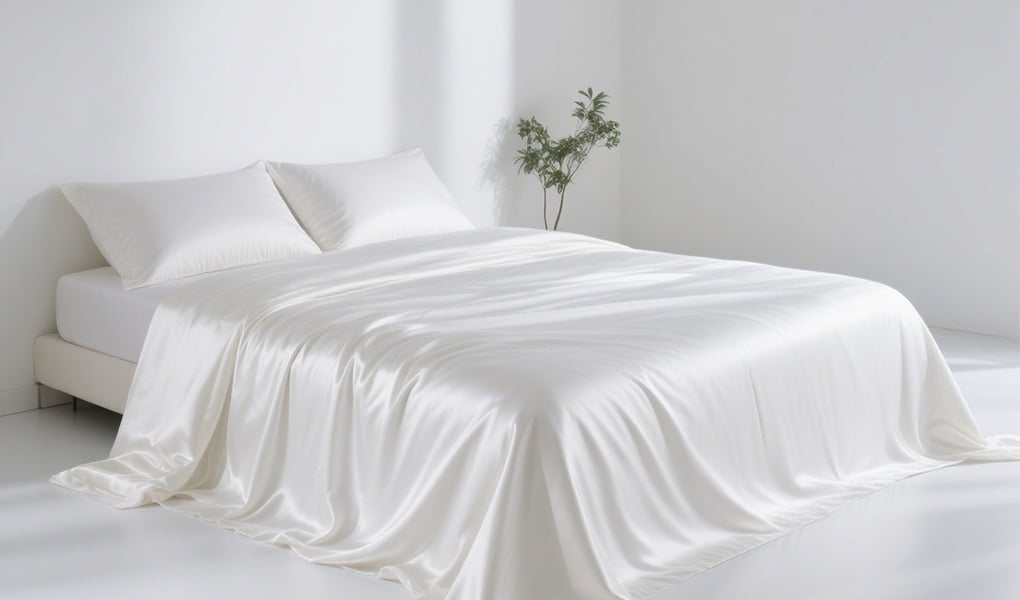
100% Silk:
“100% silk” is a broader term encompassing various types of silk fibers, including Mulberry silk. Besides Mulberry silk, other silk types like wild silk and spider silk also fall under the category of “silk”. Hence, “100% silk” can denote any fabric that is purely composed of silk fibers, not limited to just Mulberry silk.
Similarities and Differences:
Though both of them share the commonality of being composed of natural silk fibers, they possess nuanced distinctions. Mulberry silk is often considered the finest silk due to its uniform fiber structure, resulting in a softer texture. Other types of silk might offer unique properties; for instance, wild silk could be more durable, while spider silk could be exceptionally strong.
When venturing into the realm of acquiring silk products, an informed comprehension of the material’s origin and specific type emerges as a pivotal factor. For those with an inclination towards embracing nothing less than the epitome of silk excellence, the discerning selection of “100% Mulberry silk” invariably stands out as a judicious decision. The rich heritage and meticulous cultivation render it a symbol of utmost refinement and quality.