
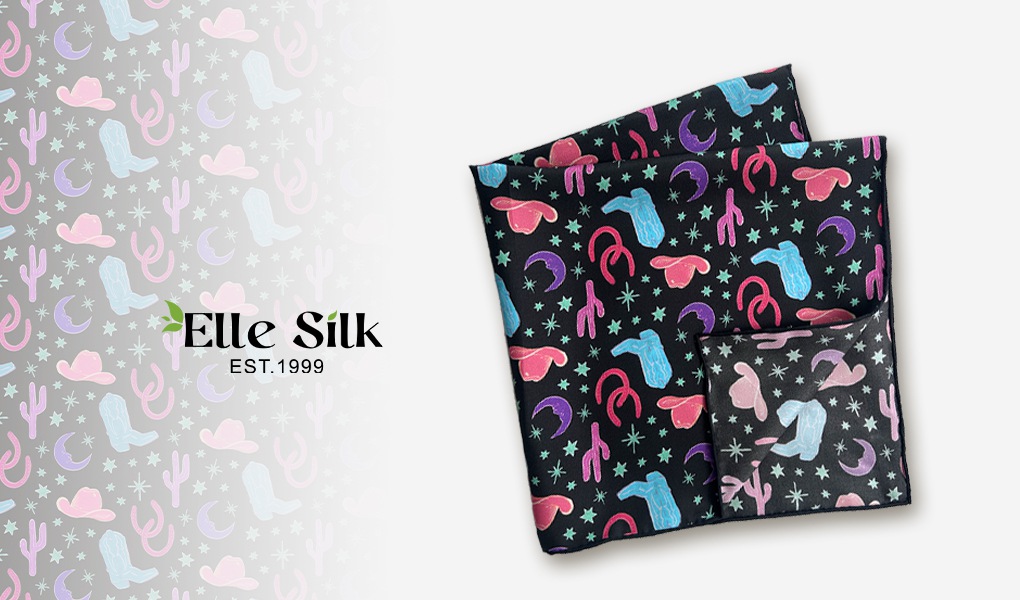
“A painting used to belong on a wall. Now it flutters at the neck, sways from the wrist, or flows behind a shoulder in motion.”
——Art historian Élodie Mahé, on the rise of wearable art
At a recent retrospective in a quiet corner of Paris, the most photographed object wasn’t the canvas on the wall—but the silk scarf draped around the gallery attendant’s neck. Soft, luminous, and threaded with brushstrokes pulled directly from the artist’s own hand, it seemed to suggest a new kind of presence: art, not as something we observe, but something we carry.
In museums like MoMA and the Tate Modern, art-inspired accessories have long occupied gift shop shelves. But what was once an afterthought—souvenirs for tourists—has taken on a more deliberate form. A shift is underway: the fashionization of fine art, or perhaps, the artification of fashion.
The Scarf as Medium, Not Merchandise
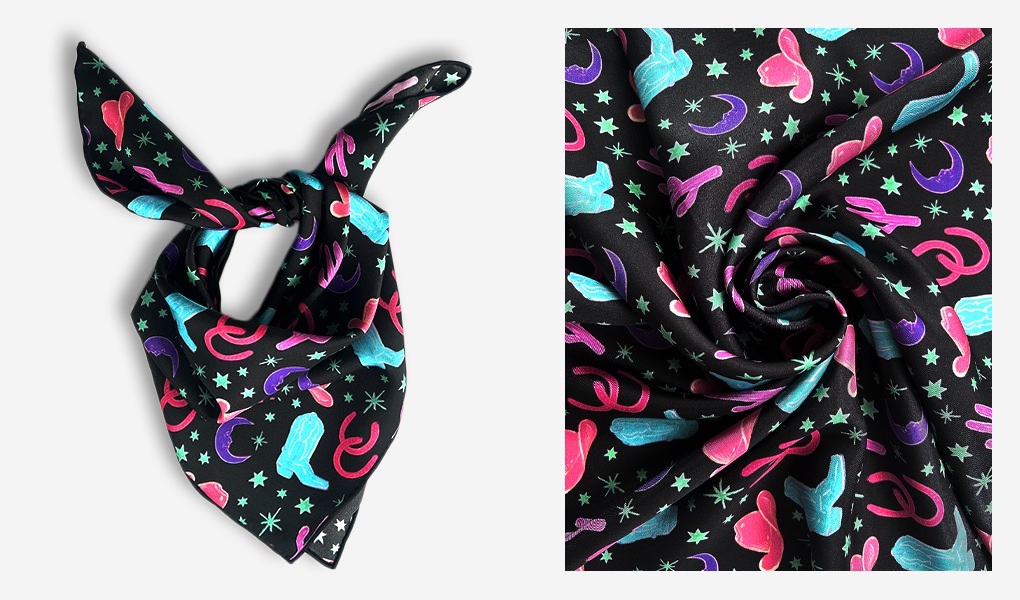
Silk scarves, in particular, have emerged as a compelling medium for what some now call “wearable canvases.” Unlike prints or totes, the scarf’s surface allows for a near-painterly experience—folding, flowing, transforming with movement. Textures and brushwork, once trapped in frame, now live on skin and in light.
Independent galleries are beginning to embrace this. In Berlin, a minimalist artist released a limited-edition wrap based on her ink drawings. In Milan, a small curatorial collective offers silk scarves printed with reinterpretations of female surrealists’ sketches—each comes numbered, signed, and sold as a “soft edition.”
These aren’t mere merchandising efforts. They serve as soft translations of the artist’s vision, turning each piece into something not just to be seen, but to be worn—and lived.
Fashion and art have long shared a language—seen in moments like Schiaparelli’s surreal silhouettes or Abloh’s homages to Basquiat. But today, that dialogue has stepped off the runway and into the rhythm of everyday life.
Emerging artists are reclaiming the accessory as a vessel for their work. It’s no longer about printing a design onto fabric, but translating artistic integrity into textile form: capturing gradients, preserving intentional brushstrokes, and letting fabric perform the narrative.
One atelier specializing in small-batch silk scarves production recently collaborated with a young abstract painter in New York. The result? A 55cm square of playful signs and soft chaos—not a scarf, but a wearable poem.
From Gallery Walls to Sidewalks: A Democratization?
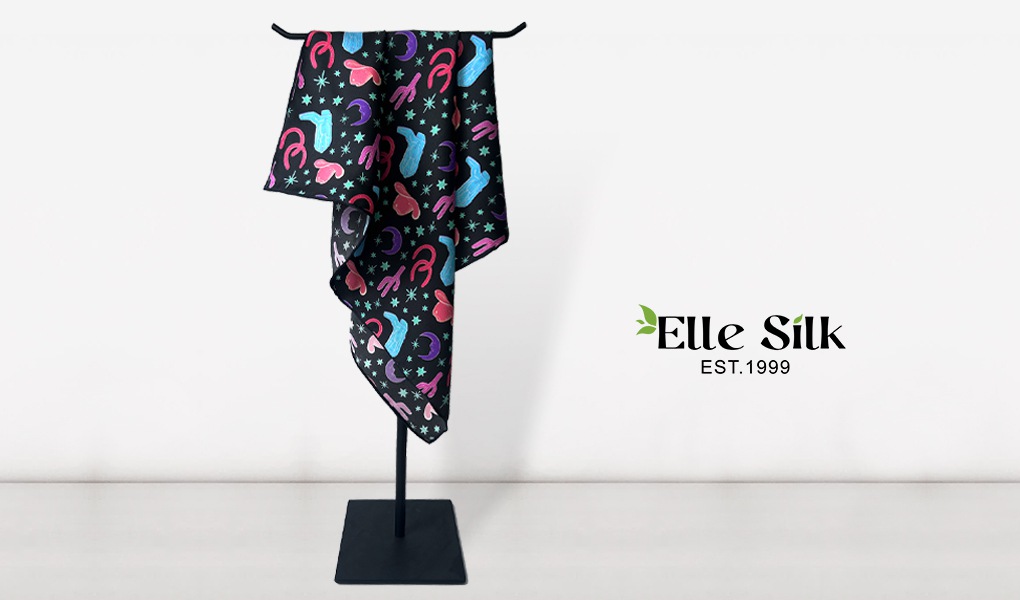
This movement hints at something deeper than style. As art spaces confront their accessibility and relevance, wearable formats offer an elegant bridge between elite and everyday. Owning a piece of art no longer requires gallery walls or deep pockets—it might be worn as a daily ritual, gifted between friends, passed down like heirloom linen.
Yet, exclusivity hasn’t vanished—it’s transformed. Scarves are often released as limited editions, numbered and documented, creating a new kind of collectible. “We think of them as post-modern prints,” one gallerist says. “Only, you tie them around your neck.”
The Intimacy of Art, Worn Close
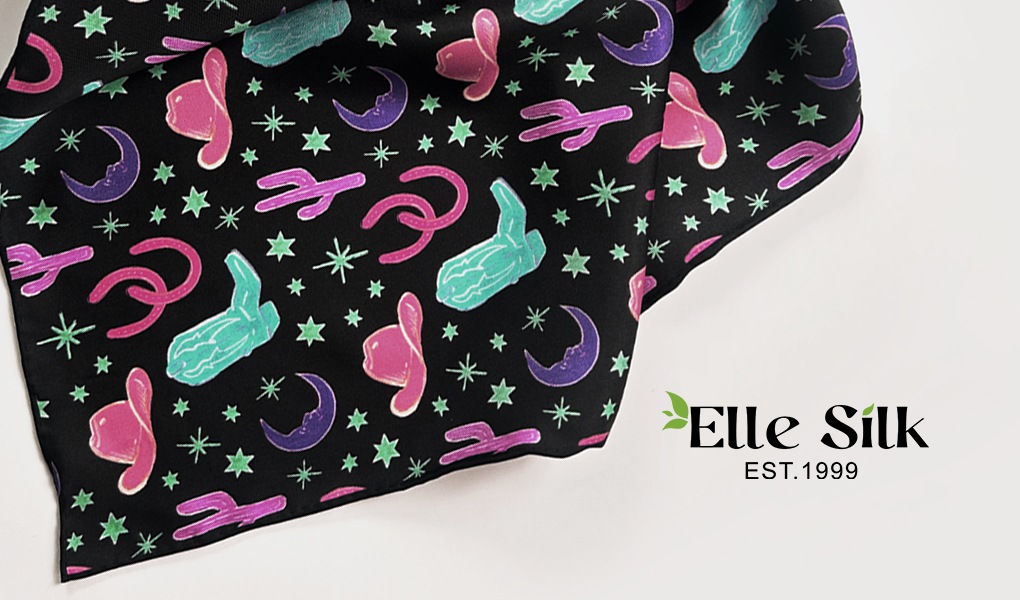
Ultimately, wearable art is not about utility. It’s about proximity. What does it mean to carry a piece of someone else’s vision—literally on your skin? To make public something that was once confined to a frame?
It means that art lives. It breathes. It follows us into subways and rooftops and rainstorms.
And sometimes, it simply rests softly at the collarbone—where even silence becomes part of the design.