
When race organizers begin planning event merchandise, the first question on the table is almost always: “Where should we place our logo?” But when runners open their participant bags after crossing the finish line, they ask a fundamentally different question: “Would I actually wear this?”
That divergence in mindset explains why so much event merchandise loses its value the moment race weekend ends. A standard performance shirt may proudly display the race identity on course, but after years of competing, most runners already have more event tees than they know what to do with. The challenge for modern race directors is no longer creating more merchandise—it is creating pieces that feel deeply worth keeping.
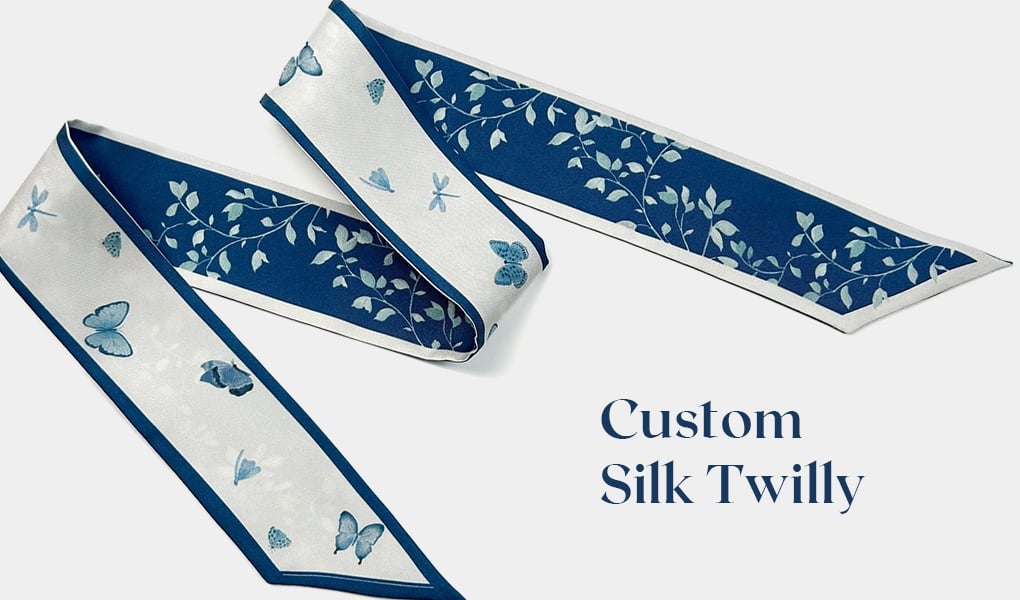
Today’s participants look for items that honor the physical effort behind their achievement, look sophisticated outside the athletic environment, and fit naturally into daily life. This is why forward-thinking events are shifting toward designing merchandise as a luxury lifestyle accessory rather than a promotional giveaway. When designed with intent, a custom twilly scarf becomes far more than event branding: it becomes a wearable memory of the city, the route, and the personal milestone behind the run.
1. Start With the Story, Not the Brand Assets
The most common pitfall in race merchandise design is starting with rigid brand assets—the primary logo, sponsor commitments, and official brand palettes. While these elements matter, treating them as the design’s foundation almost guarantees a promotional result. The strongest merchandise begins instead with a simple narrative question: What makes this specific race unforgettable?
Every endurance event already carries a story, whether it is an iconic city route, a famous architectural landmark, a grueling elevation profile, or a long-standing community tradition. The merchandise should capture that essence rather than forcing a corporate identity.
For example, a New York marathon scarf doesn’t need a massive logo dominating the fabric. A far more sophisticated approach incorporates subtle skyline illustrations, bridge silhouettes, neighborhood references, and an elegant, continuous line that traces the 26.2-mile course route.
A souvenir says, “I attended this event.” A collectible says, “This moment was important to me.”
2. Design Like a Fashion Brand, Not a Promotional Supplier
Runners are unlikely to wear something that looks like a walking billboard, but they will proudly wear an accessory that feels thoughtfully crafted by a fashion house. Premium lifestyle brands rarely rely on oversized logos; they build desire through balanced color palettes, meaningful patterns, subtle details, and rich visual composition.
To create a piece that transitions seamlessly into everyday wardrobes, avoid cramming every single official pantone into one print. A wearable palette seamlessly blends the event’s core signature tone with seasonal neutrals, soft earth shades, or understated accent colors.
Furthermore, instead of placing a single isolated graphic in the center, transform your race elements into continuous abstract patterns—such as fluid course contour lines, architectural line art, or subtle repeating typography.
Sponsors remain a vital part of major events, but luxury collaboration requires restraint. Rather than imposing stark partner logos across the main body of the fabric, integrate sponsor identities through border trims, tonal background watermarks, or coordinated edge accents. The result feels like an exclusive brand partnership rather than traditional advertising.
3. Build Collectible Value Through Intentional Scarcity
Runners treasure specific items for years because those pieces feel tied to an unrepeatable moment in time. Introducing limited-edition concepts transforms ordinary event merchandise into a coveted piece of race history.
Incorporating subtle typography such as “Boston Marathon 2026” immediately turns a scarf into a tangible time capsule. Similarly, milestone editions celebrating 10th or 25th anniversaries create instant collector appeal because they mark a specific chapter in the event’s legacy.
Reserving a distinct, high-end colorway strictly for finishers creates an even stronger emotional connection—turning the scarf into an earned badge of honor that feels fundamentally different from a standard bag giveaway.
4. Design for Real Life: From Race Day Function to Everyday Style
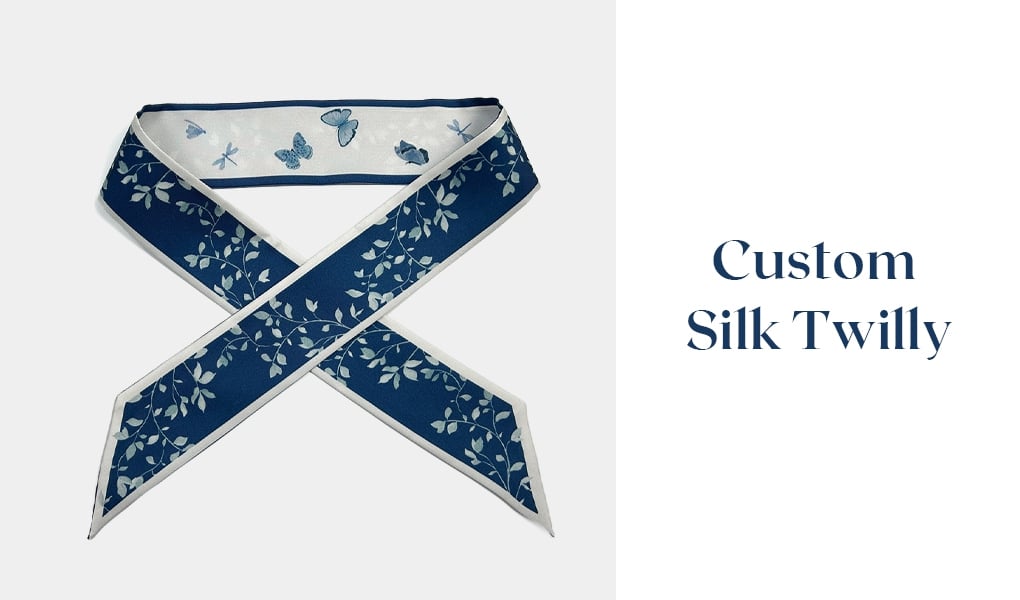
A great piece of merchandise is designed with life after the finish line in mind. The narrow, double-sided format of a custom twilly makes it exceptionally versatile across completely different settings.
On race day, runners can integrate the silk twilly naturally into their activewear—tying it tightly around a wrist as a moisture-wicking wrap, weaving it into a ponytail, or styling it as a lightweight headband. Because the scarf moves with the runner, artwork should feature fluid, continuous patterns that look beautiful from every angle rather than relying on a static, flat view.
Beyond the finish line, that same silk twilly transitions effortlessly into daily fashion. Wrapped tightly around the handle of a leather handbag, styled as an elevated travel neckscarf, or framed alongside a finisher medal, thoughtful design extends the product’s lifespan indefinitely. An item that only works during the race is quickly forgotten; a piece that fits naturally into everyday life continues telling your event’s story for years.
5. Material & Construction: The Physical Foundation of Quality
Great artwork cannot compensate for poor materials. The physical tactile quality of race merchandise ultimately determines whether runners perceive it as a cherished keepsake or cheap event clutter.
A premium race twilly should be crafted from 100% pure 6A-grade mulberry silk in an 18 momme twill weave. Unlike synthetic fabrics that feel stiff, hot, or overly shiny, pure silk provides a buttery softness, natural breathability, and an elegant drape. The 18 momme weight strikes the ideal balance between a rich hand-feel and structural durability, ensuring the scarf maintains its shape when tied.
Additionally, technical construction details elevate the final product. Using concealed internal seams and an angled edge profile gives the custom twilly a clean, fluid finish. Leveraging high-definition digital printing ensures that intricate course elevation lines and delicate typography are reproduced with razor-sharp clarity across both sides of the silk.
6. Design Pitfalls That Send Race Scarves to the Drawer
To ensure your creative investment yields maximum engagement, avoid these four common design traps:
- Over-Branding: Covering the silk in high-contrast corporate logos. If it looks like a promotional flyer, participants won’t wear it outside the venue.
- Designing Only for Race Day: Failing to test how the colors and patterns complement everyday coats, suits, or handbags in non-athletic settings.
- Choosing Cheap Synthetic Alternatives: Opting for scratchy, static-heavy polyester that ruins the tactile experience despite good graphic design.
- Neglecting Production Tolerances: Placing critical text or logo elements too close to the pointed tips of an angled edge, causing them to get folded or trimmed into the internal seam during sewing.
Conclusion: Create Something Runners Choose to Wear
The future of event merchandise isn’t about stuffing more plastic gadgets or standard apparel into participant bags. It is about choosing fewer, better-crafted items that genuinely honor the athlete’s journey.
A successful race scarf never looks like promotional material. It looks like a boutique accessory a runner would choose to buy even without the race logo—because it represents a city they conquered, a personal record they broke, and a memory they want to keep alive.
When race organizers combine story-driven artwork, fashion-forward thinking, and 100% pure silk craftsmanship, a custom twilly stops being a mere giveaway. It becomes a permanent part of the runner’s personal story long after the finish line arch comes down.