
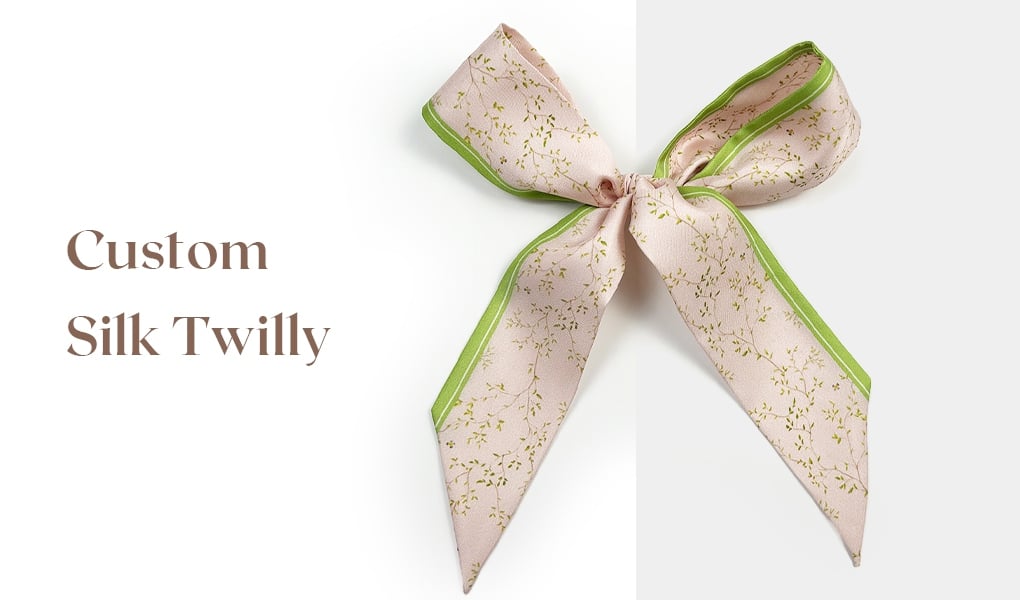
For many runners, marathon morning represents much more than completing 26.2 miles. After months of early alarms, long weekend runs, unpredictable weather, and countless hours of preparation, race day becomes a personal celebration of everything that happened before the starting line.
That is why every detail matters. The shoes, the bib, the race kit, and even the smallest accessories become part of the memories captured in race photos and finish-line moments.
In recent years, runners have started looking beyond traditional performance gear and bringing more personality into their race-day style. A twilly tied into a ponytail is a perfect example of this shift. It adds movement, color, and individuality to a running outfit, transforming a simple hairstyle into something that feels connected to the occasion.
However, marathon conditions are very different from everyday fashion. A hair accessory that looks beautiful in a pre-race photo still needs to handle hours of movement, sweat, wind, and thousands of repeated strides. The challenge is finding the right balance between visual appeal and reliable performance.
This is where a silk twilly creates an interesting opportunity. By combining the elegance of a fashion accessory with a secure hair attachment system, it allows runners to express their personal style while staying comfortable throughout the race.
Why Silk Twillies Work as Marathon Ponytail Accessories
A twilly is a narrow, lightweight scarf traditionally used as a fashion accessory. Its compact shape allows it to be tied, wrapped, and styled in different ways, from handbag accents to neckwear and hair accessories.
For runners, that versatility creates something different from traditional sports accessories. Most running gear is designed around performance alone, while a twilly introduces an element of self-expression.
Imagine a runner moving through the streets of New York during marathon day, wearing a silk scarf featuring subtle course-inspired artwork, city landmarks, or race colors. As she runs across bridges and through cheering crowds, the scarf moves with her, becoming part of the atmosphere of the event rather than simply another piece of equipment.
This is especially powerful for women’s races, destination marathons, charity events, and lifestyle-focused running experiences, where participants often see race day as both an athletic achievement and a personal milestone.
The key design challenge, however, remains the same: how do you create a scarf that looks effortless while staying securely in place for the entire distance?
Two Ways to Wear a Silk Twilly for Marathon Running
There are two common approaches when creating a silk twilly ponytail accessory. Both can work well, but they serve different purposes depending on whether the priority is long-term versatility or maximum convenience on race morning.
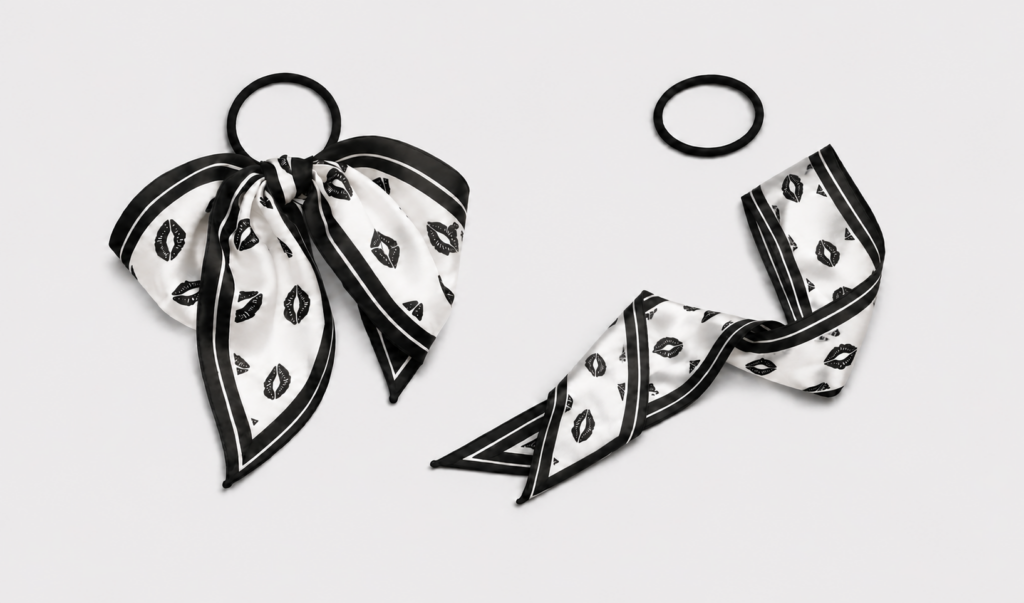
Option 1: Removable Silk Twilly Attached Through a Hair Tie
For runners and event organizers looking for a premium keepsake that extends beyond race day, a removable twilly design offers the greatest flexibility.
The concept is simple: a strong elastic hair tie provides stability, while the silk twilly is threaded through or attached to the band before being secured around the ponytail. Because the attachment point is anchored at the base of the hair, the scarf can move naturally without relying only on the friction of a knot.
This approach works particularly well for marathon environments because the runner does not need to constantly adjust the accessory during movement. The elastic holds the ponytail securely, while the lightweight silk creates the flowing visual effect that makes the style distinctive.
Another advantage is what happens after the race. Because the twilly can be removed from the hair tie, it continues to have value beyond the event itself. Runners can wrap it around a handbag handle, wear it as a fashion accessory, use it during travel, or keep it as a personal reminder of the race they trained so hard to complete.
For premium events, this creates a stronger connection between merchandise and memory. The accessory is not limited to one morning; it becomes part of the runner’s everyday life.
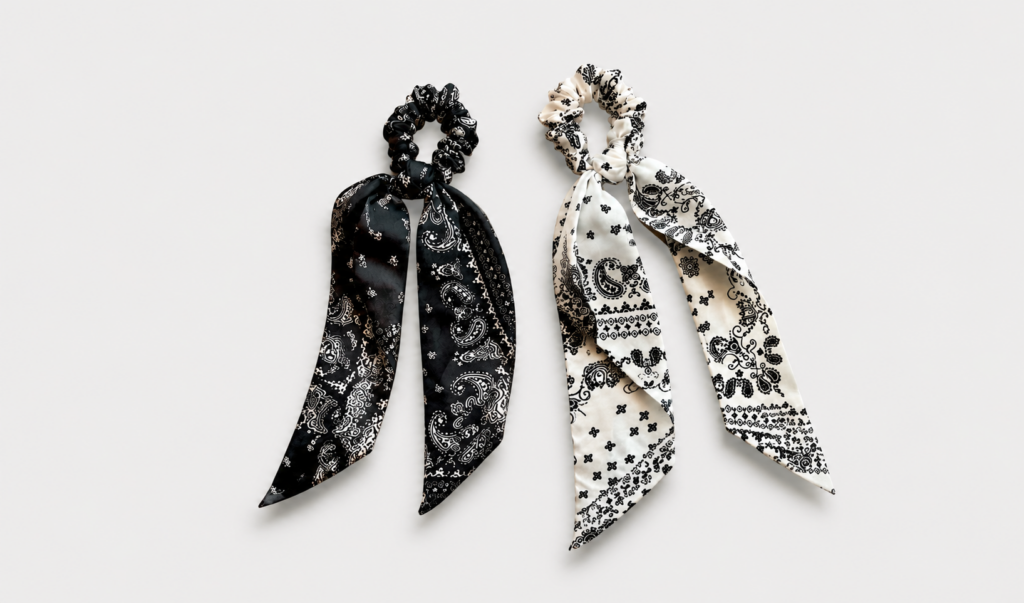
Option 2: Integrated Ponytail Twilly Design
The second approach is to permanently attach the silk tails directly into the hair accessory itself, creating a single-piece ponytail scarf.
This design focuses on simplicity. Instead of adjusting or tying the scarf separately, runners can simply use it like a regular scrunchie or hair tie. This makes it especially convenient during race mornings when participants are managing warm-ups, hydration, and final preparations before the start.
For large-scale races, this approach also creates a strong visual identity. When hundreds or thousands of runners wear the same style on course, the accessory becomes part of the overall atmosphere of the event and creates memorable race photography.
The trade-off is flexibility. Because the silk element is permanently attached, the accessory is primarily designed for ponytail use and does not easily transition into other styling options after the marathon.
For events prioritizing a unified race-day look, this can be an excellent choice. For events focused on premium keepsakes, a removable design may provide more long-term value.
Why Ponytail Twillies Create Better Race-Day Memories
One of the reasons fashion-forward race accessories have become more popular is their impact on visual storytelling.
A marathon produces thousands of meaningful moments: the anticipation at the starting line, the energy of the crowds, the final stretch toward the finish, and the celebration afterward with family and friends. These moments are often captured in photographs and shared online.
A distinctive silk ponytail scarf adds a recognizable visual element to those memories. For runners, it helps create a race-day look that feels personal. For event organizers, it creates another layer of visual identity that can extend naturally into participant photos and social content.
This is particularly valuable for branded events. When runners voluntarily wear an accessory beyond the race itself, the event identity continues appearing in everyday environments rather than disappearing once race weekend ends.
Beyond the Marathon: Wearing Your Silk Twilly After Race Day
The strongest race accessories are not limited to the moment they are distributed.
A thoughtfully designed silk twilly can continue as part of a runner’s lifestyle after the marathon. The same accessory worn during a 26.2-mile journey can later become a handbag accent, a travel accessory, or a personal keepsake connected to one of the most meaningful achievements in the runner’s life.
This long-term usability is what separates a memorable piece of merchandise from a temporary giveaway.
A race is completed in a single day, but the memories attached to it often last much longer.
The Future of Race-Day Style
Running accessories are evolving because today’s runners are looking for more than performance alone. They want products that support their goals while also reflecting their personality, their community, and the experiences they value.
A silk twilly ponytail scarf represents this shift perfectly. It combines the movement and practicality needed for race day with the personal expression usually associated with fashion accessories.
For runners, it becomes part of one of the biggest moments of their lives. For events, it creates a memorable visual identity that continues beyond the finish line.
The best race accessories do not simply complete an outfit. They become part of the story behind the achievement.