
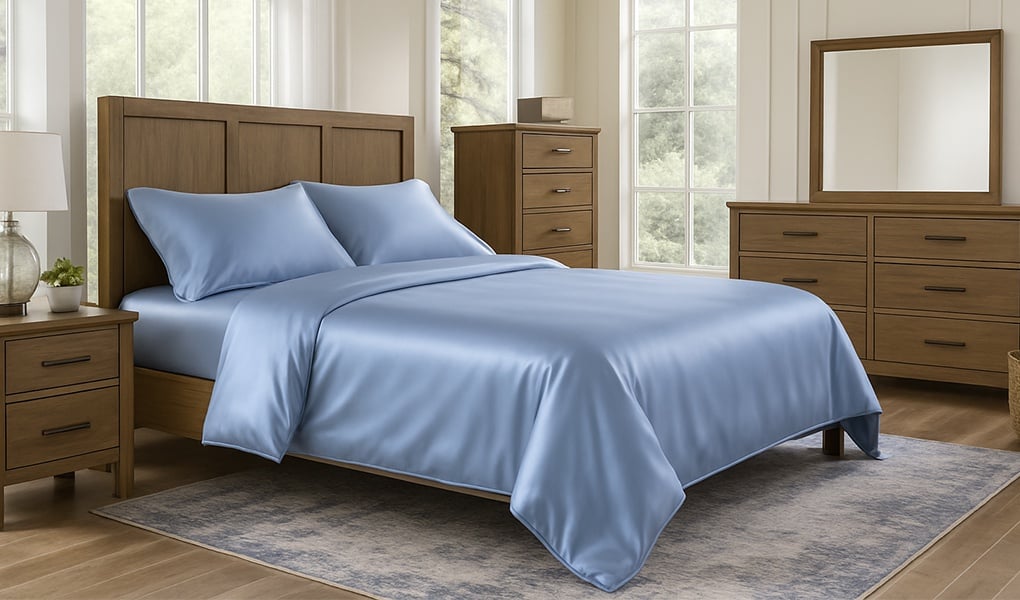
Silk bedding has long stood for softness, simplicity, and purity. But when a sheet once known for its natural ivory tone appears in misty blue, charcoal grey, or sage green, it’s fair to ask:
Is this still natural silk? Or has something been added that changes what it’s supposed to be?
If you’ve ever wondered whether colored silk sheets are as gentle, breathable, and skin-safe as their undyed counterparts — you’re not alone.
Color and Purity: A Reasonable Concern
Pure silk sheets are made from mulberry silk — a protein-based fiber known for its hypoallergenic properties, breathability, and subtle sheen. The raw color of unbleached silk is a warm, neutral ivory.
When silk bedding shows up in a wider range of colors, many thoughtful buyers pause to ask:
Is it still safe for sensitive skin? Has the fiber been treated with harsh chemicals? Will the finish affect the softness or longevity of the fabric?
These are good questions. And the answers depend almost entirely on how the silk is dyed.
Common Dyeing Methods in the Textile Industry
In most commercial bedding — including cotton, linen, and even silk — color is introduced using one of three main dyeing processes:
- Reactive dyes: Typically used for cotton. Require strong alkaline conditions and added salts to set the dye.
- Acid dyes: Used for silk and wool, but often need chemical fixatives (mordants) to lock in color.
- Pigment dyes: Sit on the surface of the fabric. Usually bonded using synthetic resins, which can reduce softness and breathability.
These methods are effective and widely used, but they often involve chemical additives that can linger on the fabric, cause skin irritation, or affect silk’s natural feel.
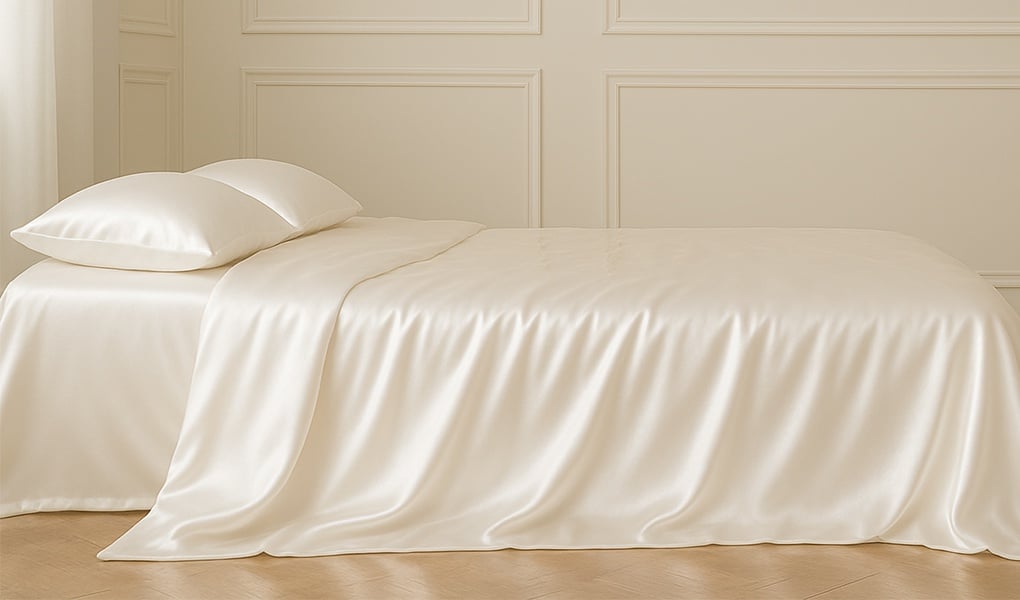
ElleSilk’s Choice: Natural Dyeing for Pure Silk Sheets
To avoid those trade-offs, ElleSilk takes a different approach — using natural dyeing to bring soft color to their silk products.
This process relies on pigments extracted from plants, using non-toxic techniques that respect both the silk fiber and the environment.
How It Works
- Dye sources: Petals, leaves, fruit peels, seeds — nature’s own color palette.
- Extraction: Gentle, chemical-free processes that retain the integrity of the dye molecules.
- Application: No synthetic fixatives, no heavy metals, no harsh temperatures. Just natural color bonding with pure mulberry silk.
The result? Beautifully colored silk sheets that look elegant, feel untouched, and are completely safe for sensitive skin — including for babies.
Why Natural Dyeing Makes a Difference
1. Subtle, Timeless Color
Unlike synthetic dyes that often produce saturated, flat tones, natural dyeing gives silk an understated beauty — layered, matte, and almost luminous. This is the palette that best silk sheets deserve.
2. Preserves Fabric Integrity
Without exposure to acid or alkaline agents, the silk fiber retains its smooth structure. You’ll feel it immediately — the signature glide of pure silk sheets, intact and enhanced.
3. Safe for All Skin Types
Natural dyes leave no chemical residue, making the fabric safe for even the most reactive skin. It’s a key reason why ElleSilk’s products are trusted by those who choose silk bedding for both comfort and care.
The Colorless Option: Ivory Silk Bed Sheets
While ElleSilk offers a curated range of naturally dyed tones, they also honor the material’s original beauty by offering ivory silk bed sheets in their most natural form.
This unbleached, undyed silk reflects the color silk takes on right after spinning — a warm, creamy hue that speaks of restraint, simplicity, and quiet luxury.
For those who prefer the feeling of something untouched, ivory is less a color choice and more a lifestyle preference. It’s silk at its most honest.