
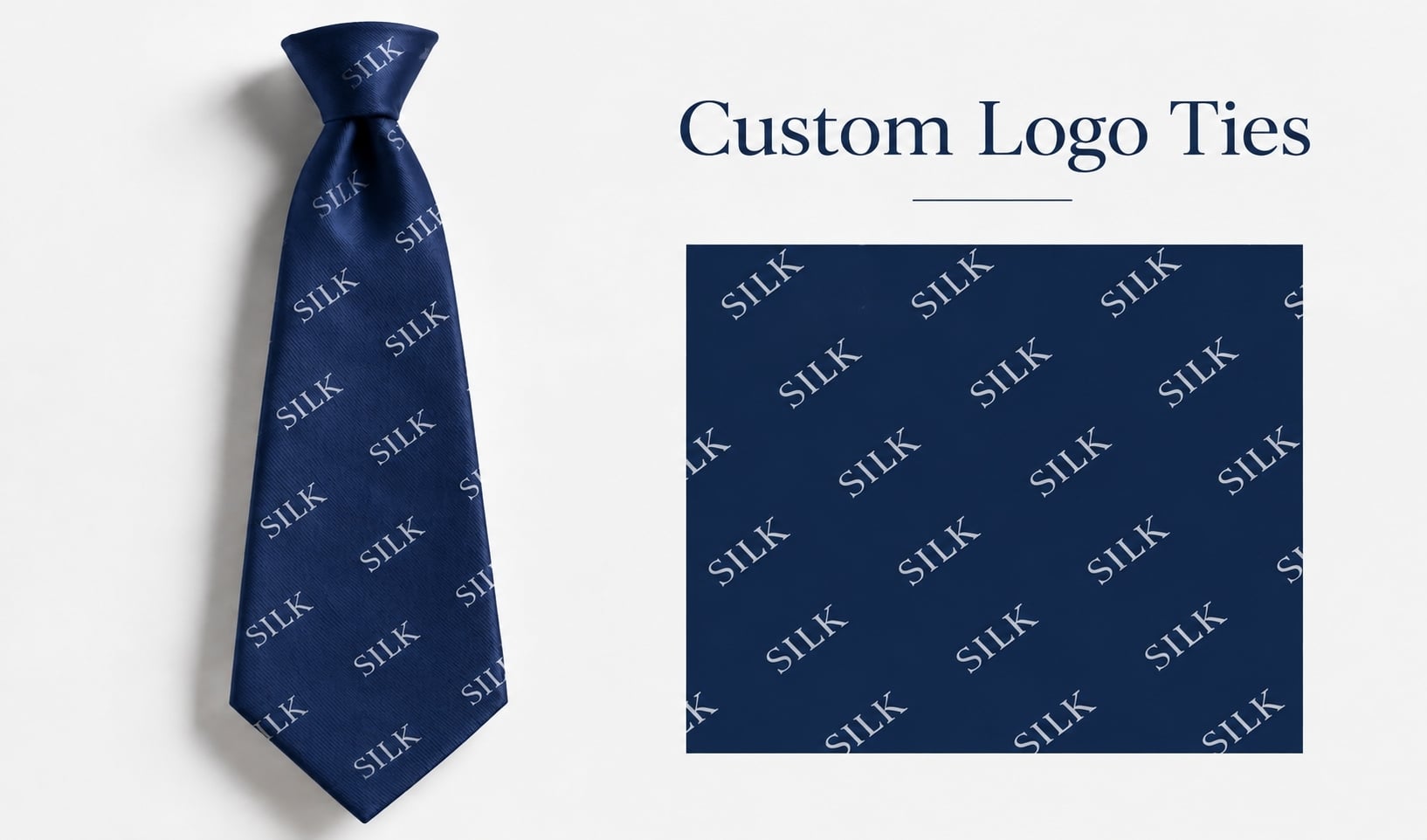
When ordering silk ties, many customers come across two options: Silk Jacquard and Silk Printed. Both use silk fabric, and both can be used for custom corporate logo ties, so what exactly is the difference? And which one is more suitable for a particular design?
To determine which option is more suitable, it is important to first understand how the design is presented on the silk fabric. Although both techniques can be used to create logos, the way the design becomes part of the fabric is different, which ultimately affects the texture, colors, and overall visual effect of the tie.
Silk Jacquard
Silk Jacquard designs are created during the weaving process. The warp and weft yarns are arranged according to the design, and variations in the weave structure create the pattern directly within the fabric. As a result, the jacquard pattern is an integral part of the fabric itself.
This is one of the most noticeable differences between a jacquard tie and a printed tie. A jacquard design is not added to an already finished piece of fabric. Instead, the fabric structure itself is used to create the pattern. This is particularly noticeable with tone-on-tone or similar-color jacquard designs. The logo does not appear as a highly visible flat image on the surface of the tie. Instead, it develops subtle depth through the texture of the fabric and the way it reflects light. Up close, the changes in the weave can be seen clearly, while from a normal wearing distance, the overall effect remains understated.
This makes silk jacquard particularly well suited to corporate business ties. Many corporate logos are relatively simple, such as lettering, initials, or clean geometric shapes, and do not rely on a large number of colors to remain recognizable. When these designs are woven into a jacquard fabric, they can become a natural part of the tie itself, adding a recognizable brand element without making the logo the dominant feature.
Another characteristic of jacquard is that the colors and patterns are created through the yarns and weave structure. For this reason, the simpler the design, the more naturally it tends to work with jacquard. If a design contains many colors, gradients, or very fine details, it is necessary to consider whether those elements can be effectively represented through the weaving process rather than simply transferring every detail of the original flat artwork onto the fabric.
For single-color or two-color corporate logos with clear lines and relatively simple structures, especially when the ties are intended for everyday business wear, silk jacquard is usually a very suitable choice.
Silk Printed
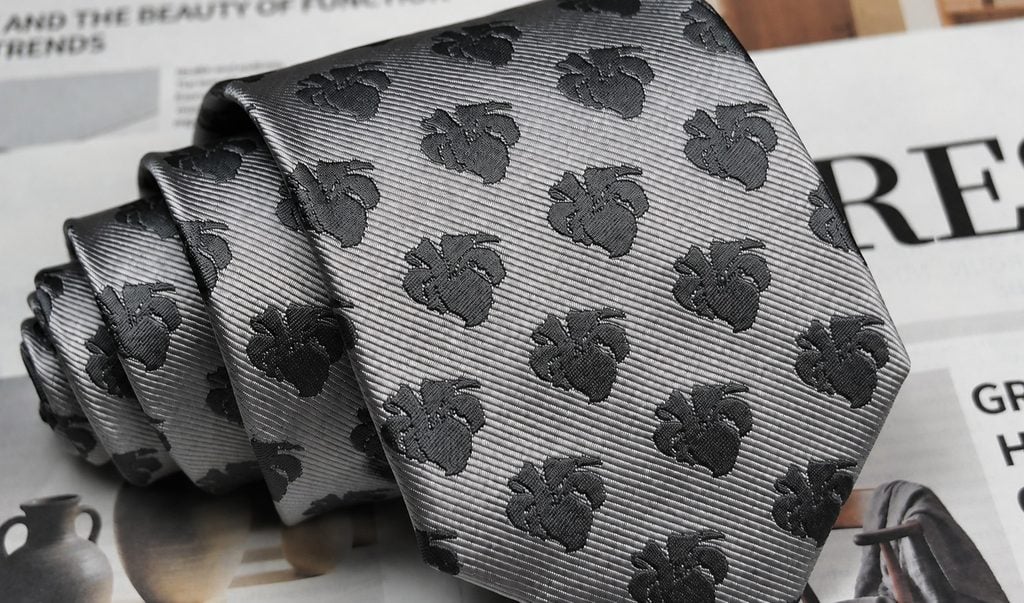
Silk printing is different. The silk fabric is woven first, and the design is then printed onto the finished fabric. Because the pattern does not need to be created through the warp, weft, or weave structure, printed silk offers greater freedom in terms of color and detail.
This is its most significant advantage.
If a logo contains multiple brand colors, gradients, shading, or a relatively complex graphic, printing can reproduce these visual elements more directly. For this type of design, color itself may be an important part of the logo’s identity. When such a design is produced as a jacquard, it has to work within the limitations of yarn colors and weave structures, whereas printing can preserve the original visual relationships much more completely.
Silk printing is also well suited to tie designs that require stronger visual expression. For example, in addition to a logo, a design may include a complete brand pattern, colorful motifs, or other visual elements that are intended to become an important part of the overall tie design. In these situations, printing provides greater freedom to reproduce the design.
That does not mean printing is simply a way to make a logo more noticeable. For a very simple, single-color logo, printing does not necessarily provide any additional design value. In fact, when a simple logo is created through jacquard weaving, the texture and natural sheen of the silk can give it a more integrated and refined appearance.
The real advantage of silk printing is that when a design requires more colors and details, it provides greater freedom to reproduce those elements accurately.
How to Choose Between Silk Jacquard and Silk Printing
Once the differences between the two techniques are clear, the choice mainly comes down to the characteristics of the design.
If the design is single-color or two-color, has a simple structure, and uses relatively clean lines, silk jacquard is generally the first option to consider. This is particularly true for corporate business ties where the logo is intended to blend naturally into the tie rather than appear as a highly prominent surface graphic.
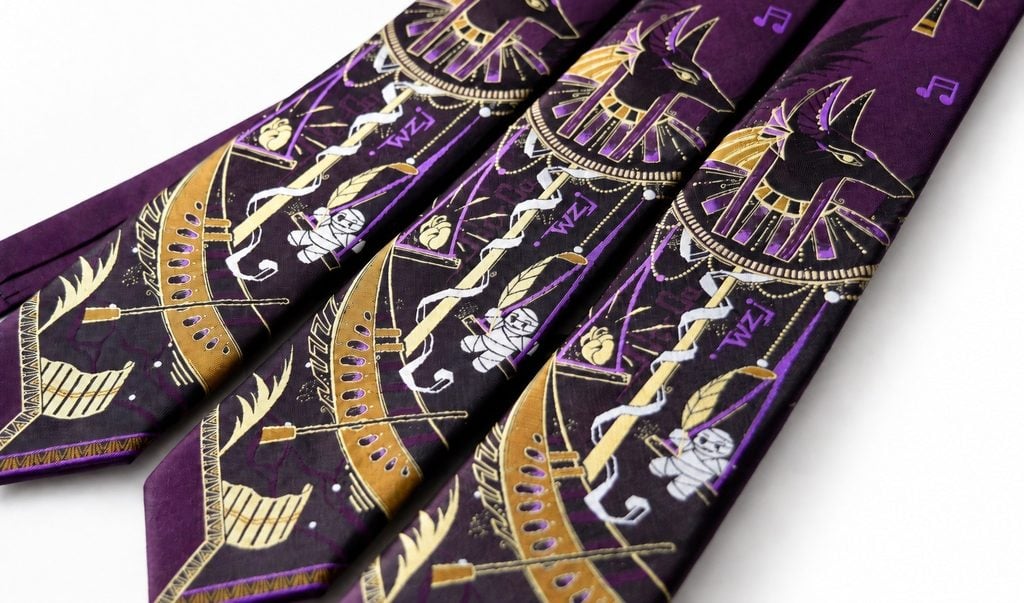
If the design contains multiple colors, gradients, complex graphics, or many details that need to be reproduced accurately, silk printing is generally more suitable. These designs rely more heavily on color and detail, and printing allows the original visual relationships to be reproduced more faithfully.
There is also a simple way to think about the distinction: if the logo remains easily recognizable when its colors are removed and only the basic shape is retained, it will usually work well as a jacquard design. If the logo becomes significantly less recognizable without its colors, printing is often the better choice.
This is not an absolute rule, but it is a practical guideline for most custom logo ties.
In actual applications, a simple corporate logo in silk jacquard is a well-established choice for business ties, while a design with richer colors and more visual details can make better use of the capabilities of silk printing.
How Can a Silk Tie Stay Structured When Silk Is So Soft and Lightweight?
After considering the differences between jacquard and printing, there is another practical question that often comes up: silk itself is lightweight, soft, and smooth, so how can a silk tie maintain its shape after being tied?
Natural mulberry silk is indeed known for its softness and lightness, which is also one of its advantages as a premium tie fabric. However, the structure of a finished tie does not depend solely on the outer silk fabric. Its internal construction is equally important.
One of the key components is the interlining.
For both silk jacquard and silk printed ties, we use high-quality polyester interlining to support the shape of the tie. This type of interlining provides elasticity and firmness similar to wool, giving the soft silk fabric the structural support it needs. It helps the tie maintain a stable shape after being tied while also providing a certain degree of recovery.
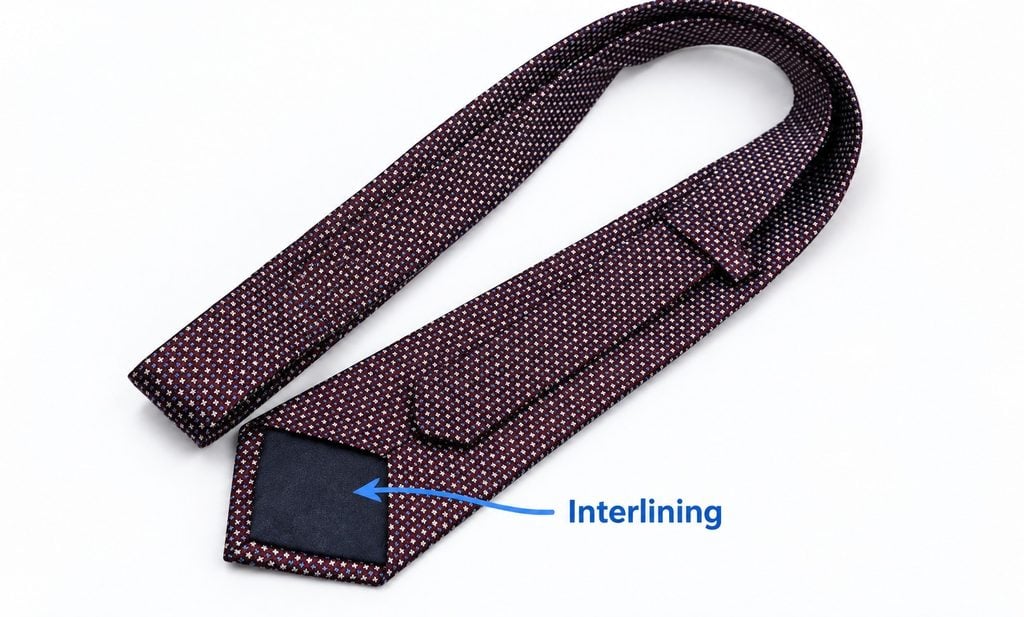
The character of a silk tie therefore does not come from making the silk itself stiff. Instead, the outer fabric and the interlining serve different purposes. The silk provides the lightweight, smooth hand feel and natural luster, while the interlining provides the structure and firmness required of a business tie. Together, they allow the tie to retain the characteristic feel of silk while maintaining the shape needed for formal wear.
For corporate logo ties, choosing between jacquard and printing is not simply a matter of personal preference. Looking at the colors, complexity, and most important visual elements of the design will usually provide a clear direction. Simple and clean designs are well suited to the texture and structure of silk jacquard, while complex, multi-color designs can make better use of the color and detail reproduction offered by silk printing.