
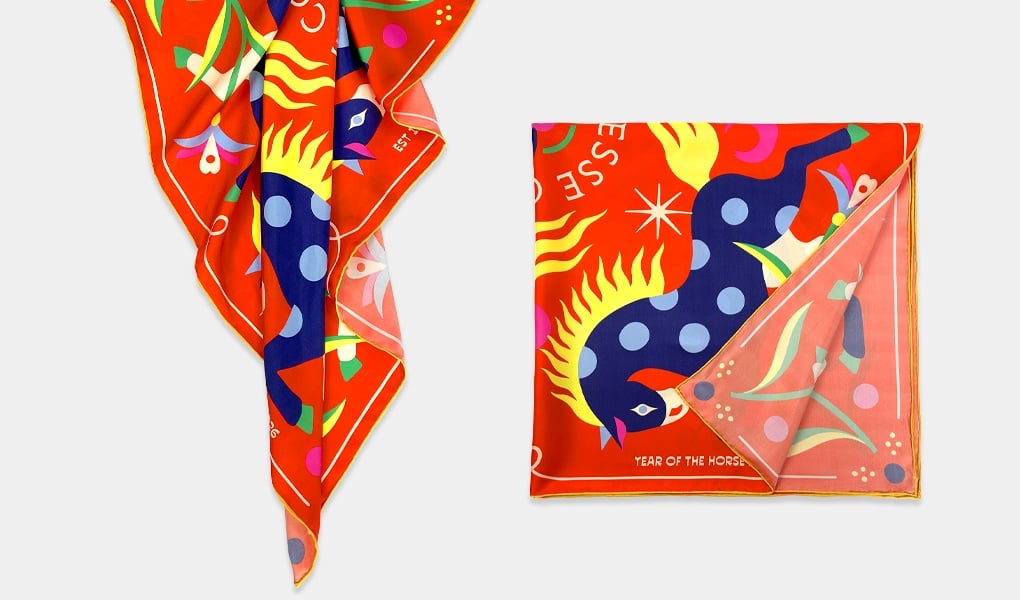
Recently, a client asked us a very practical question about a custom silk scarf with a specific orange background: “Do we choose the color of the scarf itself first, or is the design printed on white silk?”
Her next question was: “If it is printed on white silk, will the back be white?”
Both questions come from the same natural assumption: if you want to make custom silk scarves with an orange background, shouldn’t you start with orange silk and then print the flowers on top? But that is not how custom digitally printed silk scarves are produced.
The Orange Background Is Part of the Print
With reactive digital printing, we start with pretreated white silk fabric. In simple terms, this is a continuous piece of white silk that has been prepared for printing but does not yet have any colors or patterns on it. It is not a finished white silk scarf.
If the artwork includes an orange background, with flowers, leaves, and a white border, all of these colors are printed together as part of the complete design. We do not dye the silk fabric orange first and then print the other elements onto the orange fabric.
There is a practical reason for starting with white silk fabric: it provides a neutral base for all the colors in the artwork. Lighter shades such as pale pink, cream, and yellow can be reproduced accurately alongside a orange background without being affected by an existing fabric color.
This also means that the scarf’s background color comes from the artwork rather than from a limited selection of pre-dyed silk. If a client needs a particular forest green or a specific brand color, we work on reproducing that shade during the printing and sampling process.
Simply put, pretreated white silk fabric is the starting point for printing. The orange is part of the finished design.
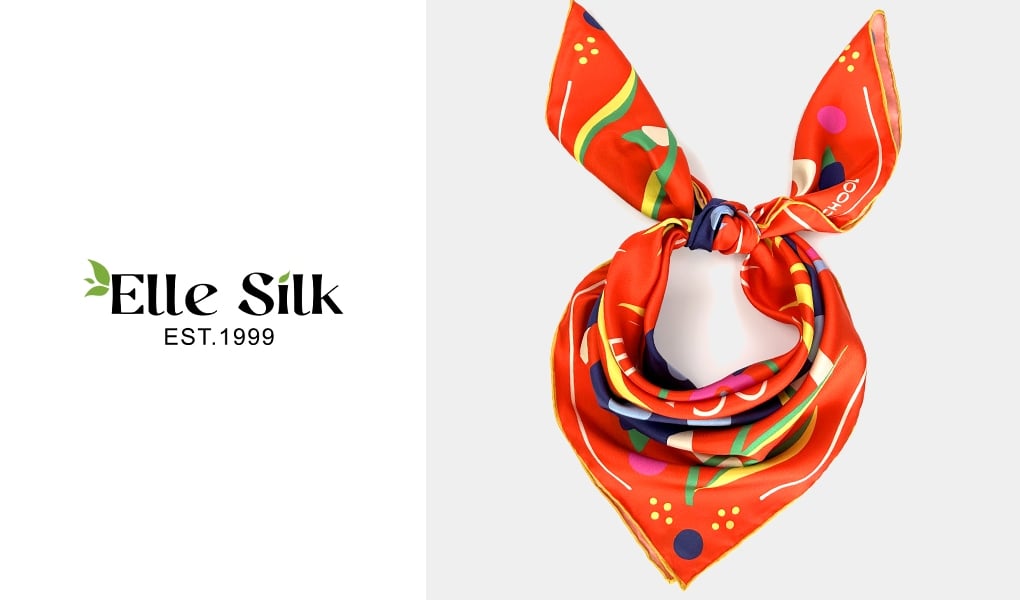
Does the Printed Orange Sit on Top of the Silk?
The word “printing” can sometimes create the wrong impression. Printing a silk scarf is not quite like printing a logo onto the surface of a T-shirt.
Our silk scarves are produced using reactive digital printing. During processing, reactive dyes bond with the silk fibers rather than simply forming a thick layer on the surface of the fabric. After printing, the silk goes through additional processes such as steaming and washing to develop the color and remove excess dye.
As a result, even a scarf with a full orange background can retain the softness, fluid drape, and natural sheen expected from silk. The fact that the orange background is printed does not mean the finished scarf will feel as though it has been covered with a layer of orange coating.
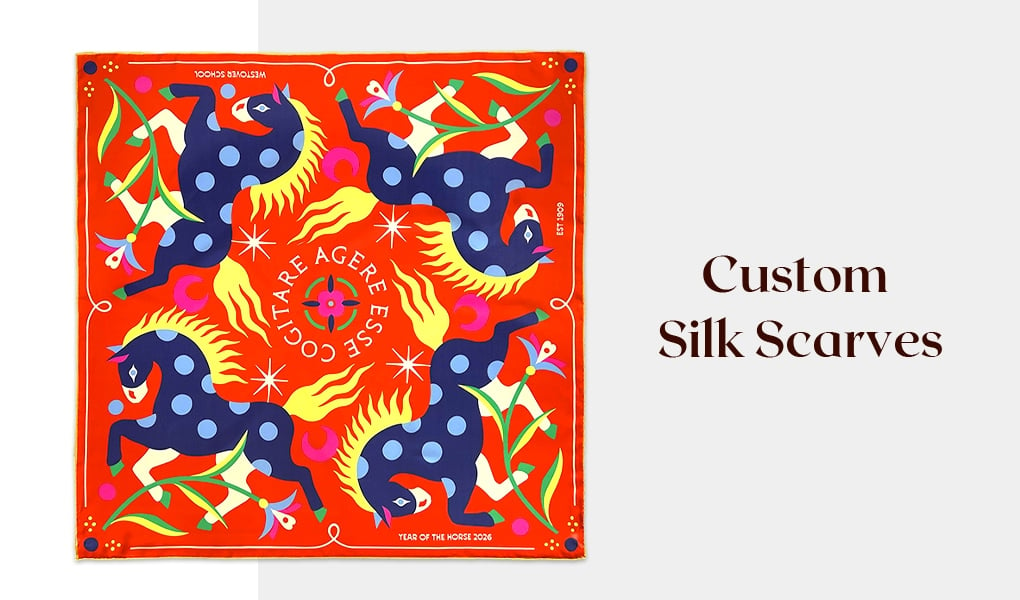
What Does the Reverse Side Actually Look Like?
For many clients, this is the real concern. A scarf is folded, knotted, draped, and wrapped when worn, so the reverse side will inevitably be visible.
With single-sided reactive digital printing, the dyes penetrate into the silk fibers, allowing the design and colors to be visible from the reverse as well. The back is not simply left as plain white fabric just because the printing started with white silk.
However, this does not mean the front and reverse will look exactly the same. The front is the primary printed side, so the colors are usually richer and the details sharper. The same design is visible on the reverse, but the overall color can appear softer. With an orange background, for example, the difference between the two sides is usually easier to notice than with a lighter, softer-colored design.
Our scarves are made from 18 momme silk twill, so the actual appearance of the reverse should be judged based on how the artwork prints on this specific fabric rather than from a digital mockup alone. The artwork itself also affects the result. A design with large areas of dark, saturated color can behave differently from a lighter design with more open space. For this reason, we prefer to evaluate the actual artwork on the actual silk rather than assume in advance how closely the reverse will match the front.
Good color penetration should also not be confused with true double-sided printing. A well-printed single-sided silk scarf can look complete and attractive from both sides, but the reverse is still the reverse. If a project specifically requires the same level of color saturation on both sides, that needs to be discussed as a different production requirement.
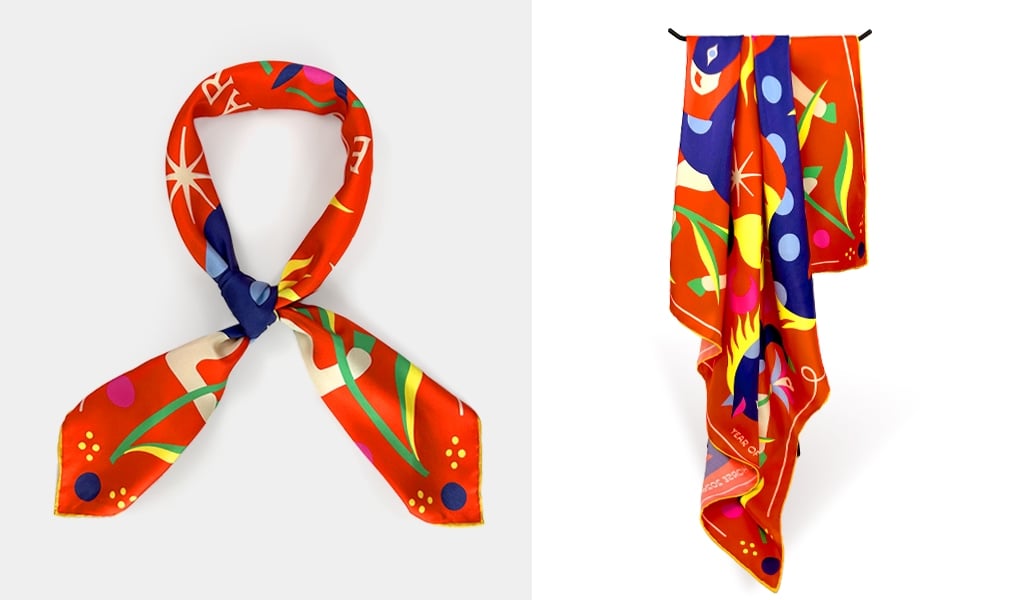
Will White Show When the Scarf Is Folded or Tied?
With a properly printed silk scarf, turning, folding, or tying the scarf will not suddenly reveal a plain white backside. Because the dyes penetrate into the silk, the reverse also carries the overall design and color, although it will usually appear softer than the printed face.
The difference between the two sides tends to be more noticeable with very dark or highly saturated background colors. Deep navy, black, burgundy, or forest green, for example, can make differences in color depth between the front and reverse easier to see.
That is what customization is about: staying as true as possible to your original design, without having to compromise your colors based on what is already available. The finished scarf comes from your design, not from a limited selection of existing colors.