
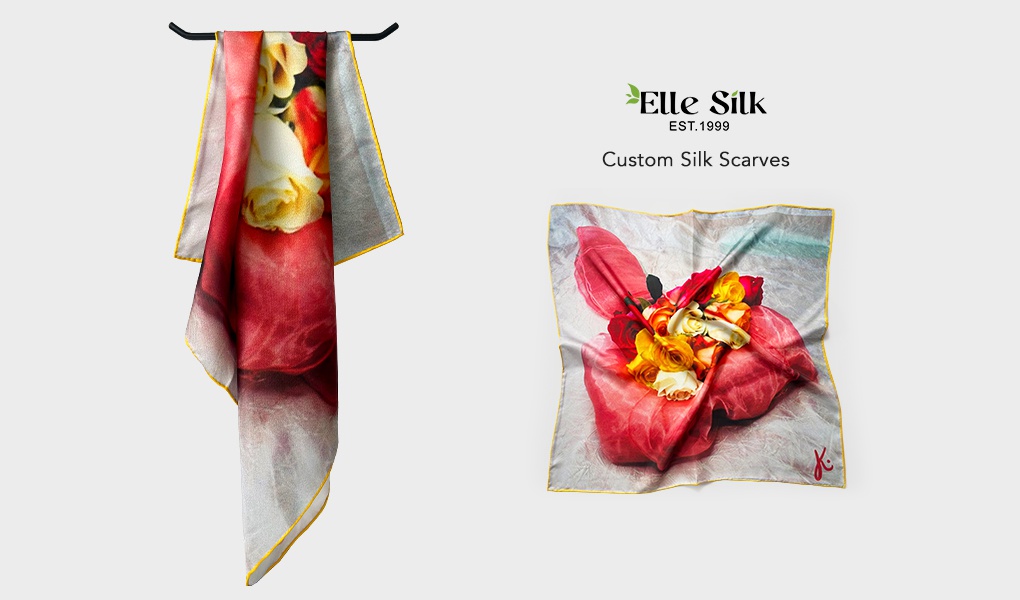
Turning an oil painting into a silk scarf might sound like a romantic idea. But behind that lies a precise process—one that involves translating image, texture, and artistic intent from canvas to fabric. It’s not just a matter of replication, but of reinterpretation. What results is not simply a printed scarf, but a new expression of the original artwork. This custom scarf is one such example.
The Image: More Than Decorative—It Feels Like a Painting
This is not just a decorative pattern. The design comes directly from an oil painting. The subject is floral, but the focus isn’t on botanical accuracy or narrative. Instead, it’s about the way color stacks into form, how light defines volume.
Red, yellow, and white dominate the palette. The transitions between hues are subtle, layered with care. You can almost see the brushwork—the movement, the blending, the intentional imperfection. This isn’t a digital composition made for textiles. It’s the visual residue of a painter’s hand.
That’s the key difference. This isn’t a pattern designed for a scarf—it’s a painting translated into one.
The Style: Impressionist Light, Romantic Emotion, Renaissance Structure
It’s hard to assign a single art movement to the piece, but the visual language is unmistakable:
- The color treatment is reminiscent of Impressionism—soft edges, tonal interplay, a focus on atmosphere over outlines.
- Emotionally, the image leans toward Romanticism. It’s expressive, less about representation, more about presence.
- Structurally, there’s a quiet discipline. A centered composition, balanced forms—almost echoing Renaissance clarity.
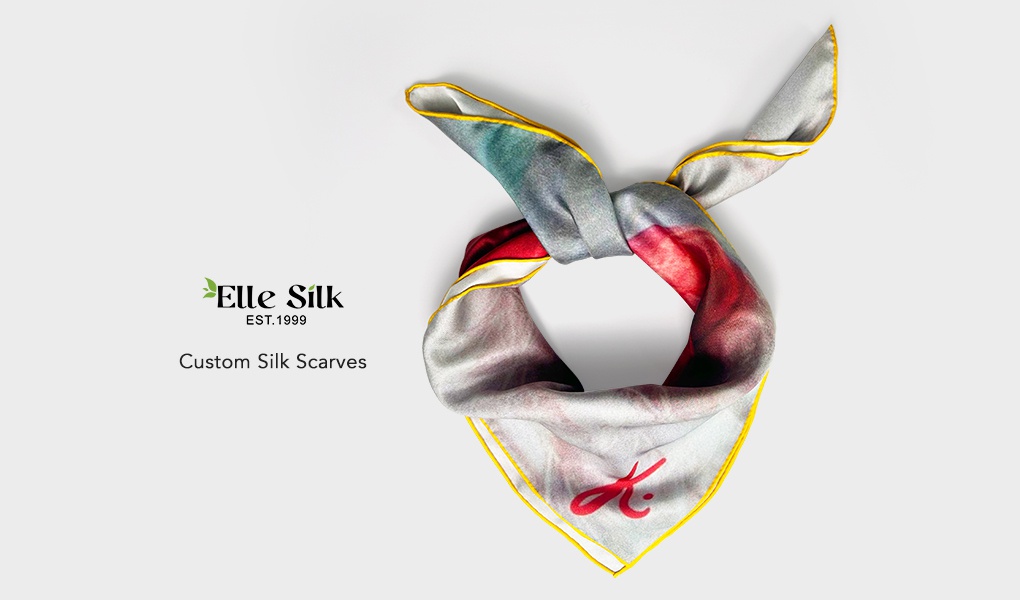
The result is a visual harmony that wears well. Even when the scarf is folded or knotted, the composition still feels whole. That’s part of the design intelligence—it allows the artwork to stay readable in motion.
The Craft: Detail Isn’t a Buzzword—It’s a Technical Challenge
What matters most in transferring an oil painting to fabric is detail. Not just resolution, but fidelity to tone, texture, and brushstroke.
Traditional printing methods often flatten these qualities. But here, high-resolution digital printing manages to retain the layered depth of the original. Subtle gradients stay intact. Fine transitions between pigment are preserved. And the silk itself—the soft sheen, the delicate drape—complements the visual rhythm of the painting.
The painting remains alive. Not as a still image, but as something wearable, tactile, and responsive.
Why Custom Matters: Not Just “Printed on a Scarf”—But Made Into One
The value of customization isn’t just in creating a unique item. It’s about carrying the artist’s language into another form without losing its integrity.
An oil painting isn’t just lines and colors—it’s energy, movement, emotion. Custom scarf design is about translating that into a new material, with new constraints. The format has changed. The use has changed. But the essence of the work should remain.
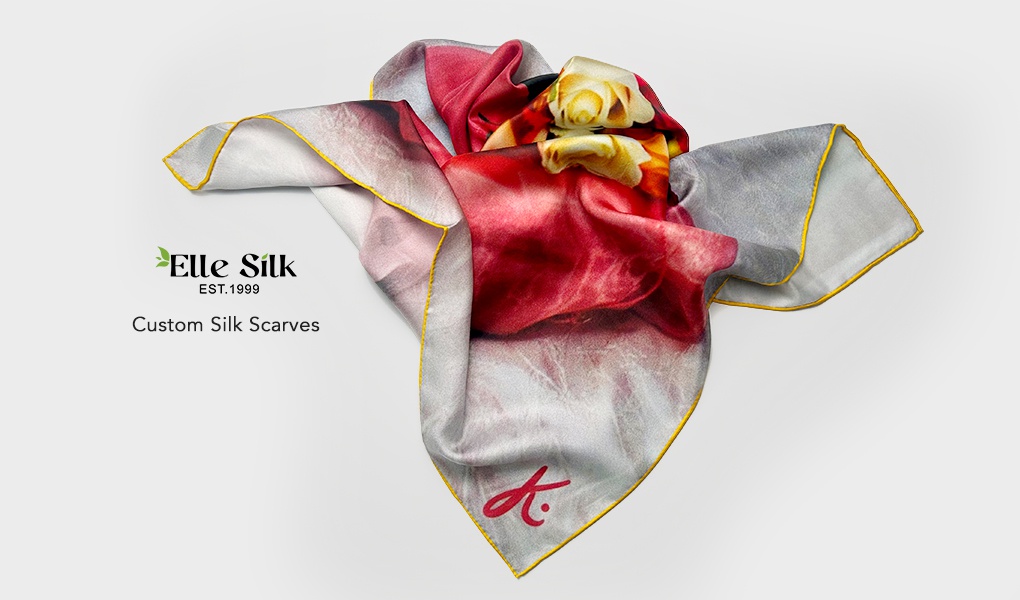
That’s why this isn’t about “putting a painting on a scarf.” It’s about turning a painting into a scarf. Every fold, every knot, every shift in the silk is a quiet re-composition of the original. And if the artwork still communicates—even in motion—then the design has done its job.
In the End: A Painting You Can Wear
A scarf is a small thing. But it can carry big ideas. Especially when it holds within it a real piece of art.
This scarf doesn’t just add color or finish an outfit. It offers a way to bring fine art out of the gallery, out of the frame, and into everyday life. To wear it is to keep a fragment of that world close—not in theory, but in practice.It’s not distant. It’s not decorative.
It’s a story, retold in silk.