
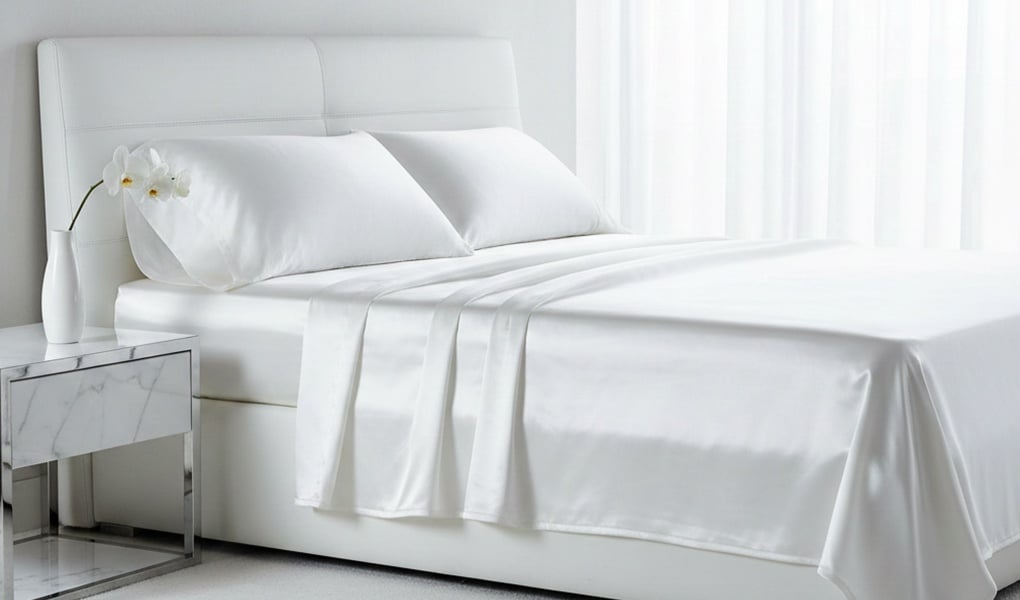
Mulberry Silk Sheets vs. Everything Else
In 2026, beauty has quietly shifted.
For years, we focused on what we put on our skin — retinol, peptides, barrier creams. Now, the conversation is expanding to something more subtle: What your skin rests on for eight hours every night. Welcome to the era of Protein Sleep. And at the center of it? – 100% Mulberry silk.
From Skincare to “Skin Contact”
Dermatologists often emphasize protecting the skin barrier. But here’s something most of us overlooked:
Your skin doesn’t stop interacting with its environment while you sleep.
For 6–8 hours, your face is pressed against fabric. That fabric can either:
- Increase friction
- Pull moisture away
- Trap heat
Or it can minimize those effects.
That’s why silk is trending again in 2026 – not as a luxury statement, but as a functional upgrade.
1. Protein-to-Protein Contact: Why Silk Feels Different
Unlike cotton (plant cellulose) or polyester (plastic-based fiber), silk is a natural protein fiber composed mainly of fibroin. Its amino acid structure is closer to that of human skin than synthetic materials.
Does silk “feed” your skin? No.
But it does create a gentler contact surface.
Cotton is absorbent – great for towels, less ideal when your skin is layered with expensive nighttime products. In dry climates especially, cotton can accelerate surface moisture evaporation.
Silk:
- Is smoother at a microscopic level
- Causes less surface drag
- Helps maintain a more stable overnight moisture environment
If you’re using retinoids, exfoliating acids, or barrier-repair creams, minimizing disruption matters.
2. The Friction Factor: Hair Breakage & Sleep Lines
If you wake up with:
- Pillow creases on your face
- Frizz or flattened hair
- Tangles at the nape
That’s mechanical friction at work.
Silk has one of the lowest friction coefficients among natural bedding materials. Its smooth fiber structure allows skin and hair to glide rather than pull.
For hair:
- Less breakage
- Reduced frizz
- Longer-lasting blowouts and curls
For skin:
- Fewer compression lines
- Less mechanical stress
- Reduced irritation for sensitive or acne-prone skin
Silk won’t replace Botox. But reducing nightly mechanical stress is a long-term preventative strategy more dermatologists are acknowledging.
Think of it as passive anti-aging.
3. Temperature Regulation: A Real Benefit for Hot Sleepers
“Cooling sheets” has become one of the most searched sleep terms this year. Synthetic satin often traps heat. Cotton can hold moisture once damp.
Silk naturally:
- Regulates temperature
- Allows airflow
- Adapts to body warmth
- Feels cool in summer and insulating in winter
For hot sleepers, perimenopausal women, or anyone prone to night sweats, this can make a noticeable difference.
It’s not air conditioning. But it is materially different.
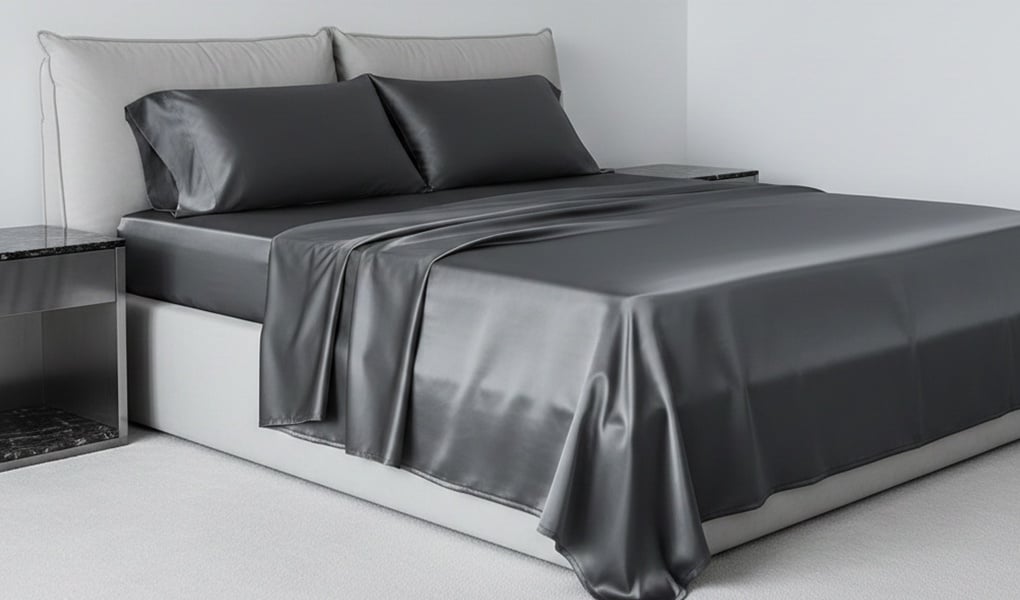
4. Acne, Sensitive Skin & Allergies
One of the fastest-growing skincare questions in 2026: “Are silk sheets better for acne?”
Here’s the balanced answer: Silk won’t cure acne, but it can reduce aggravating factors.
Because silk is:
- Low-friction
- Non-abrasive
- Less irritating to compromised skin
- Often certified safe (when OEKO-TEX Standard 100 labeled)
For people with rosacea, eczema, hormonal acne, or reactive skin, minimizing environmental triggers can help support overall skin calmness.
It’s not treatment, it’s environmental optimization.
5. Silk vs. Bamboo vs. Satin: What Actually Matters
Bamboo (viscose):
- Soft
- Breathable
- Chemically processed from plant pulp
Polyester satin:
- Smooth
- Shiny
- Affordable
- Heat-retentive
- Plastic-based
Mulberry silk:
- Natural protein fiber
- Highly breathable
- Low friction
- Durable when high momme weight
The difference isn’t just about feel. It’s about structural behavior under pressure, heat, and moisture.
6. How to Buy Real Silk in 2026
This is where many consumers get misled.
If you’re investing, look for:
✔ 22 or 25 Momme weight
The ideal balance of durability and drape.
✔ Grade 6A Mulberry Silk
The highest fiber quality classification.
✔ OEKO-TEX Standard 100 certification
Ensures the fabric is free from harmful substances.
Avoid products labeled “silk satin”, as most are polyester.
Is It Worth the Price?
This is the real question.
If you:
- Invest in high-end skincare
- Struggle with frizz or hair breakage
- Sleep hot
- Have sensitive or acne-prone skin
Silk becomes less about luxury and more about consistency.
The Verdict
Skincare no longer ends at your night cream.
It continues through your contact surfaces.
Silk sheets aren’t magic, but they are biologically compatible, friction-minimizing, and thermally adaptive.
In 2026, that’s not excess, that’s strategy.