
On the quiet shores of Lake Tai, the early morning light has a softness that feels almost unreal—somewhere between mist and glow. Local embroiderers say this is the best light for judging the true color of a silk thread. It sounds poetic, but it is simply the level of precision this craft demands.
Among the world’s textile arts, Su Embroidery from Suzhou, China stands out not only for its long history, but for the way it turns patience, detail, and a deep sense of beauty into a language anyone can understand.
The global appeal of Su Embroidery begins with its devotion to detail
At exhibitions around the world, Su Embroidery often makes viewers think they are looking at a small painting. Its impact is instant and universal:
- Threads are fine enough to look transparent
- Colors shift softly, as if shaped by light
- Images appear so lifelike they seem to breathe
The first reaction is rarely about culture or tradition—it’s simply astonishment. People don’t need background knowledge to feel its beauty.
Today, as many art institutions in Asia, Europe, and North America pay more attention to textile art, Su Embroidery fits perfectly into this global movement: a return to slow craft, real skill, and visible care.

Double-Sided Su Embroidery: a rare technical wonder in the world of fiber art
If Su Embroidery is impressive, then double-sided embroidery is its most unbelievable form.
It requires that:
- Both sides show a complete, finished image
- Front and back match perfectly
- No knots, no loose ends, no visible starting points
- Even the path of each needle must be exact
The embroiderer must plan two images at once and guide silk threads through nearly invisible spaces without making a single mistake.
In global textile history, there are very few techniques that can match this level of precision. It is not just a traditional craft of one region—it is a technical achievement that stands out anywhere in the world.
And the reaction is always the same: How is this done by hand?

A single thread of silk can carry light
What makes Su Embroidery truly special is its understanding of light.
Silk naturally reflects and bends light. By adjusting how the thread is split, the direction of each stitch, and the layers of color, embroiderers create images that change with every angle.
This gives Su Embroidery a surprisingly modern quality: it is not flat art—it is a small sculpture made of light and fiber.
In global art discussions, it is often described as light-responsive textile art. This means its beauty doesn’t rely on cultural explanation—it speaks through the way it interacts with light.
From Suzhou’s water towns to the world: a craft that travels by its own strength
Su Embroidery comes from Jiangnan’s river towns, but it is not limited by geography. Just like Japanese kintsugi, French couture embroidery, or Andean weaving—once a craft reaches a certain level, it naturally crosses borders.
Su Embroidery has been chosen as a national gift and has entered the collections of several international institutions. Its global presence is not built on slogans. It is built on professional skill that holds up anywhere in the world.
Craft historians often say: True craftsmanship does not need translation.
Su Embroidery proves this.

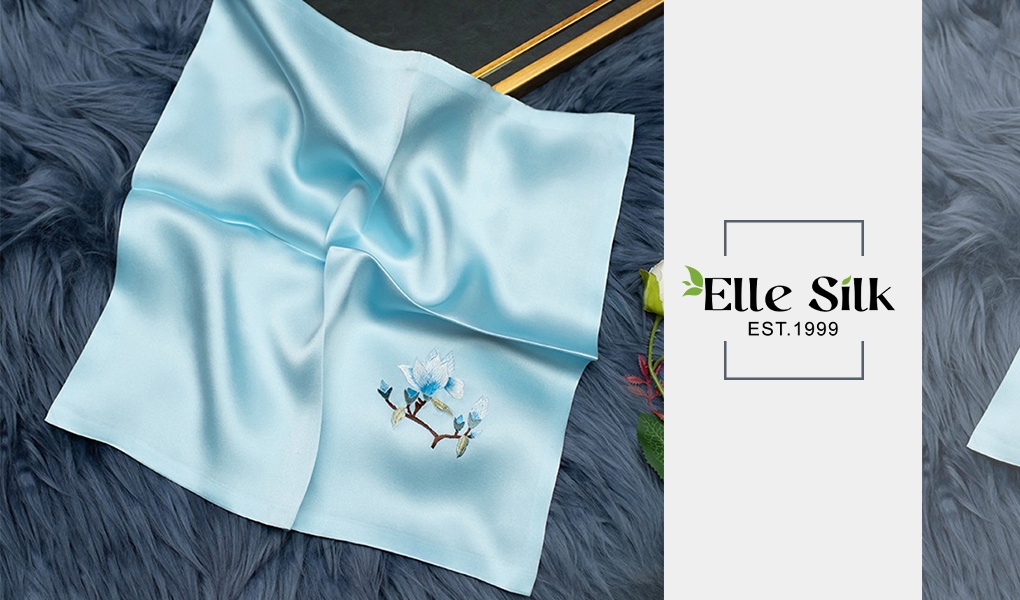
A Su Embroidery handkerchief: a small piece of art you can hold and wear
In today’s fashion world, there is a growing love for wearable art—objects that carry craft, beauty, and personality in a form you can take with you.
A Su Embroidery silk handkerchief fits perfectly into this idea:
- Small in size, rich in detail
- Soft, luminous silk that works naturally with fashion
- Flower motifs like orchids and peonies offer a universal sense of beauty
- Suitable for wearing, gifting, or keeping as a personal treasure
A handkerchief embroidered with orchids is not just an object from the East—it is a modern expression of elegance and quiet strength.
In your hand, it feels like a soft reminder that beauty can be gentle and powerful at the same time.
Su Embroidery comes from China, but it speaks to people everywhere. Its beauty is something you can see, touch, and even wear.
And within each thread lies not only the spirit of Jiangnan, but also a kind of beauty that crosses cultures and time itself.