
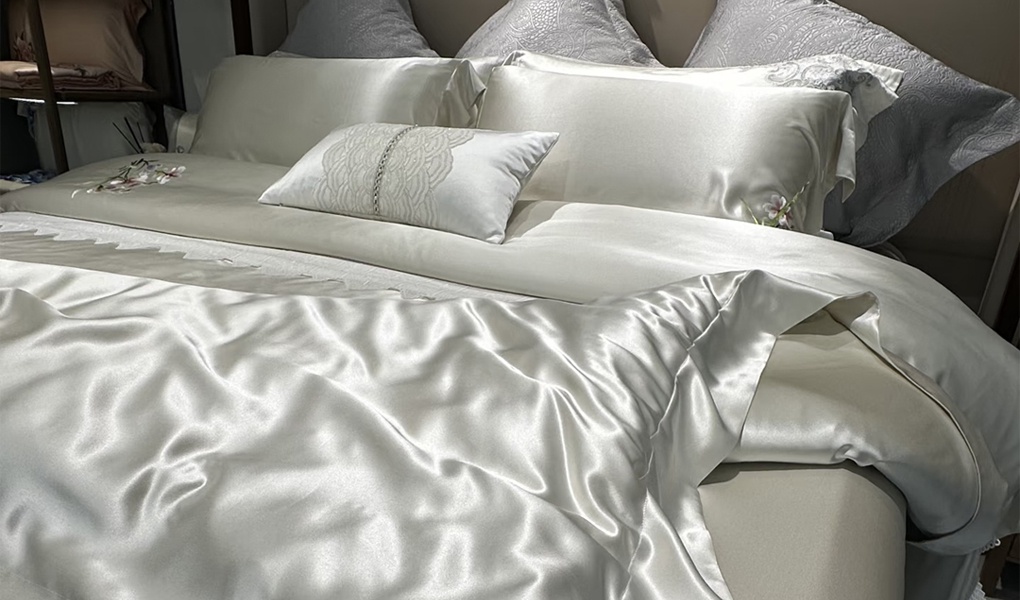
When you shop for luxury bedding, sleepwear, or scarves, you’ve probably seen terms like Satin, Silk Satin, and Mulberry Silk. They sound fancy and often get used interchangeably, but they actually refer to different things. Many shoppers get confused by these labels and sometimes end up paying for something that looks silky but isn’t real silk at all. This guide breaks down these terms clearly so you can understand what you’re buying and make better choices.
What Is Satin?
Satin is not a fabric fiber. It’s a weaving technique. The satin weave creates fabric with a smooth, shiny surface and a dull back. It has a soft, slippery feel and reflects light beautifully, which is why it’s popular for bedding, dresses, and decorative pieces.
Satin can be made from many different fibers. The most common are:
| Type | Material | Characteristics | Price |
| Polyester Satin | Synthetic polyester | Inexpensive, strong shine, smooth but not breathable, can feel hot | Low |
| Nylon Satin | Nylon | Similar to polyester but with more stretch | Low |
| Cotton Sateen | Cotton in satin weave | Smooth surface, breathable, soft shine | Medium |
| Silk Satin | Silk fiber in satin weave | Very soft and smooth, naturally breathable, elegant shine | High |
Because satin refers to a weave, not a material, a product labeled “satin pillowcase” or “satin sheets” is usually made from polyester satin, not silk, unless it clearly states otherwise.
What Is Silk Satin?
Silk Satin refers to fabric that uses real silk fibers woven with a satin weave. It combines the natural benefits of silk with the luxurious look and feel of satin.
- Silk is breathable, absorbs moisture, and helps regulate temperature. It’s cool in summer and warm in winter.
- The satin weave gives the fabric a glossy, fluid surface that feels incredibly smooth against the skin.
Silk satin is often used for high-end silk sheets, sleepwear, scarves, and dresses. It’s considered the most luxurious type of satin.
Silk Satin vs Regular Satin
| Feature | Regular Satin (usually polyester) | Silk Satin |
| Material | Mostly synthetic | 100% silk |
| Feel | Slippery but slightly plastic-like | Exceptionally soft and smooth |
| Shine | Very glossy, mirror-like | Soft, natural pearl-like glow |
| Breathability | Poor, traps heat | Excellent, regulates temperature |
| Price | Inexpensive | Expensive, premium |
| Care | Machine washable | Gentle hand wash or silk detergent only |
All silk satin is satin, but most satin products on the market are not silk satin.
What Is Mulberry Silk?
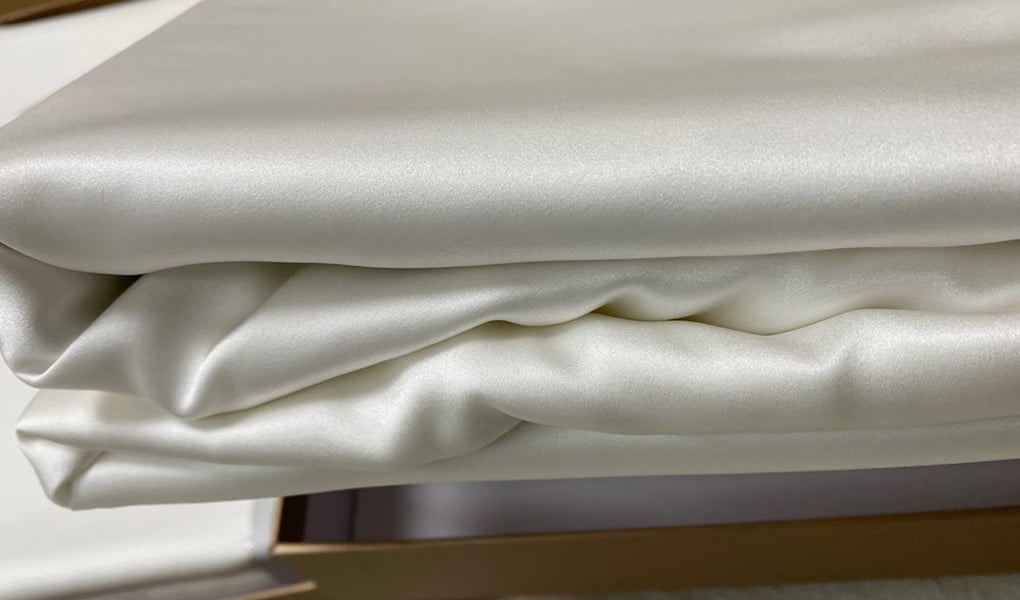
Silk is a general term for natural protein fiber produced by silkworms. Mulberry silk is the highest quality silk. It comes from domesticated silkworms that feed on mulberry leaves.
Mulberry silk has very fine, smooth, and white fibers. It’s soft, breathable, durable, and has a beautiful natural luster. It’s the preferred material for luxury silk bedding and garments.
There are other types of silk, like tussah silk or eri silk, which are coarser, more yellowish, and less soft than mulberry silk. These are cheaper but not the same quality.
Mulberry silk refers to the raw material, not the weaving method. It tells you the silk itself is premium quality.
How Satin, Silk Satin, and Mulberry Silk Relate
Here’s a simple way to think about it:
- Satin = a type of weave
- Silk satin = silk fiber woven in satin weave
- Mulberry silk = the best kind of silk fiber
Visualizing it:
Satin (weave)
│
┌────────┴──────────┐
Polyester Satin Silk Satin
│
Mulberry silk (fiber)
Not all satin is silk. Not all silk satin uses mulberry silk, but the best silk satin usually does.
Common Consumer Confusions
Many people mix up these terms when shopping. Here are some of the most common issues:
- Thinking satin and silk are the same. Satin is a weave; silk is a fiber.
- Mixing up polyester satin with silk satin. They look similar but feel and perform very differently.
- Assuming all silk is mulberry silk. There are cheaper types of silk that don’t feel as smooth.
- Confusing weave names with fabric types. Words like sateen, charmeuse, or habotai refer to different weaves or finishes, not materials.
- Being misled by marketing terms like “silky,” “silk touch,” or “luxury satin,” which often describe synthetic fabric.
- Not knowing how to care for silk. Real silk needs gentle washing, while synthetic satin is machine washable and more durable.
When you shop, always check the material label. If it only says “satin” without specifying the fiber, it’s most likely polyester. If you want the real thing, look for “100% silk” or “mulberry silk.”
Understanding these terms in this guide helps you avoid misleading marketing and choose truly comfortable, high-quality products.