
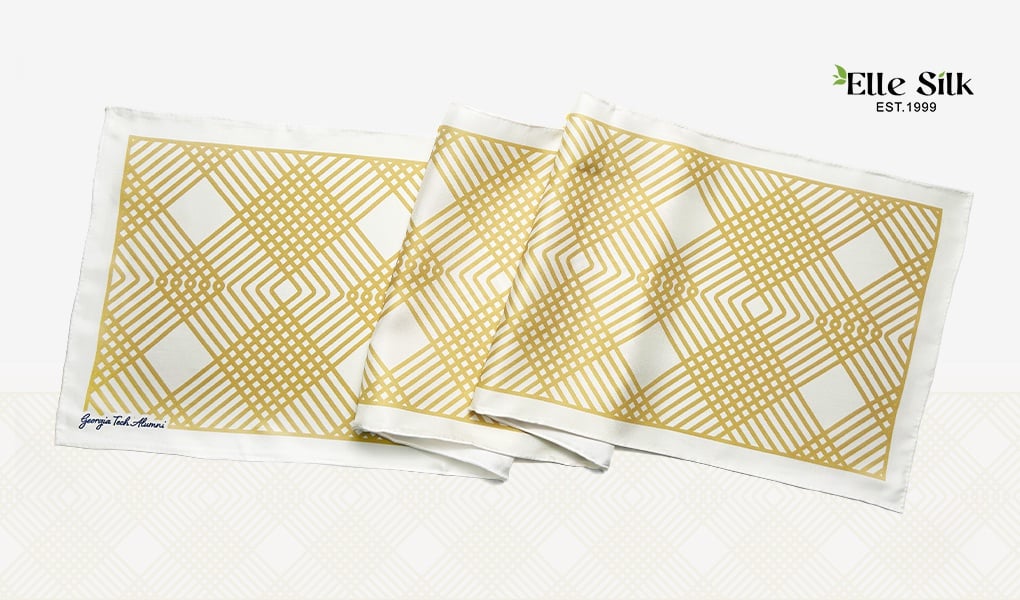
Designing long silk scarves is trickier than most people expect. Unlike a square, it won’t lie flat or stay still – it loops, folds, drapes, twists. Which means your design has to move with it.
At ElleSilk, we work with many designers and brand creatives who are excited to create long, long silk scarves – like 30x140cm or 70x175cm. And while most start off confident, it’s not uncommon for hesitation to set in right before finalizing the design.
Will this still look good when it’s tied? What if the center gets hidden? Will the key artwork even be visible once someone puts it on?
These are smart questions. Long scarves follow a very different design logic from square ones. Here’s what we suggest keeping in mind before you start.
Don’t design just for the flat layout
It’s easy to imagine your scarf design as a full, flat image – like a poster. For square scarves, that often works fine. The main graphic tends to stay centered and visible, no matter how it’s folded.
But long scarves behave differently. They’re usually wrapped, knotted, looped around hair, shoulders, bags, or necks. What people actually see is only a small part of the full design – often in motion, often layered.
That means your artwork shouldn’t rely on a single focal point. Instead, think of the scarf as a flowing visual rhythm. It needs to look good in fragments, not just as a whole.
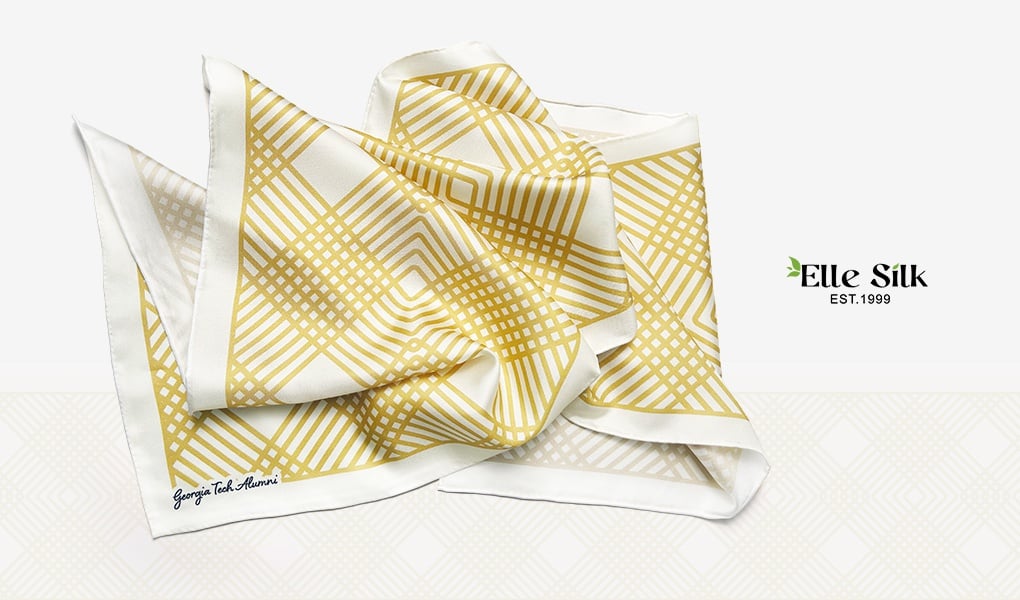
Avoid dense, symmetrical patterns
Long scarves naturally stretch the eye from end to end. If your design is too symmetrical or packed into one area, it can feel heavy or awkward once the scarf is worn.
What tends to work better:
- Stripes or directional elements
- Gradients and color transitions
- Repeating patterns or abstract motifs
- Light, scattered illustrations
- Stronger detailing on the ends, lighter design in the middle
These layouts help keep the scarf balanced while allowing different parts of the design to peek through when it’s folded or tied.
If you’re telling a story, spread it out
We love seeing story-based designs – whether it’s flowers blooming across the silk, symbolic motifs, or illustrated scenes. But remember: if you place all the detail in one small area, it might never be seen.
A good approach is to spread the elements across the full length. Let the story unfold as the scarf does. You can place different parts at either end, or let the imagery flow from one side to the other.
Repeating key elements can also help, so no matter how it’s styled, something meaningful always shows.
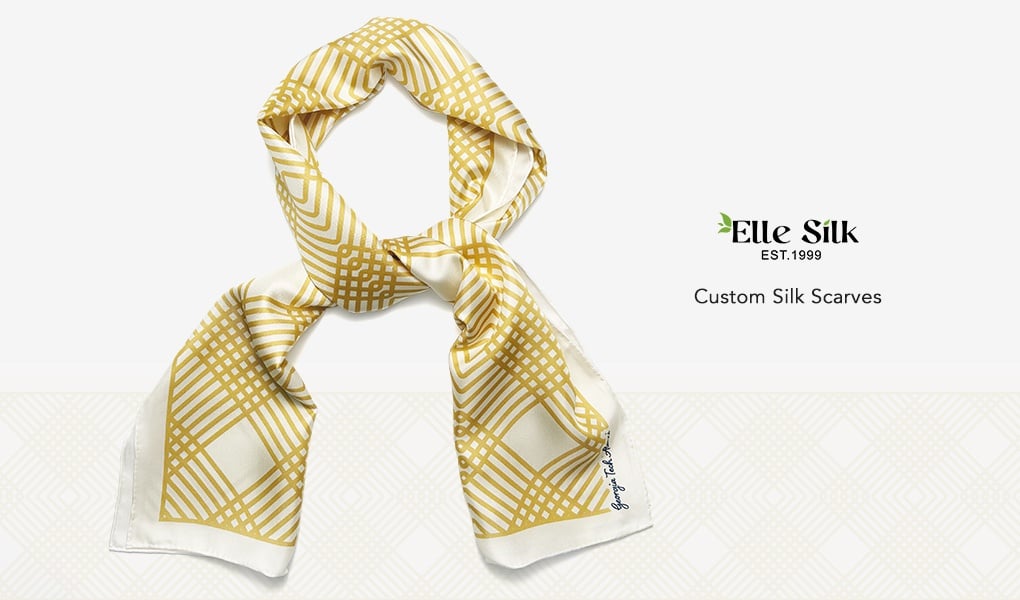
Let the design breathe
One common mistake is trying to fill every inch of the canvas. A scarf doesn’t need to be packed with detail to feel complete. In fact, a bit of breathing space usually makes the final piece feel more elegant – and helps the artwork stand out.
Try thinking in a visual rhythm. A common and effective layout: more detail at the ends, a softer or quieter center, and a good balance of space throughout.
This not only looks good in motion, but ensures your design feels wearable and refined.
Before you start, picture how it’s worn
Before opening your design file, try picturing how the scarf will actually be worn. Maybe it’s looped loosely around the neck. Maybe it’s tied once and draped over a blazer. Maybe it’s folded in half and tucked through itself.
These little details change which parts of the scarf get seen – and which don’t. The most successful designs are those that keep this in mind from the beginning.
Long silk scarves are full of movement. That’s what makes them so exciting – and what makes designing them a creative challenge. We hope these tips help you design with confidence and clarity.