
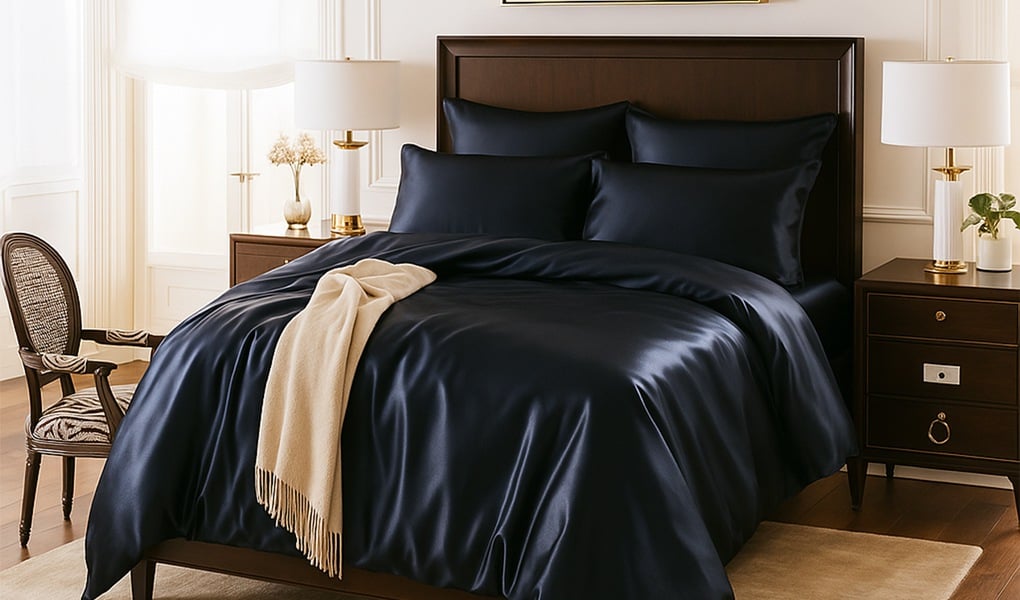
More people are sleeping naked these days. For many, it’s not about rebellion or sensuality—it’s about comfort. A sense of lightness. A return to the body’s natural rhythm at the end of the day. But here’s something most people never consider: When you sleep nude, your skin isn’t bare. It’s wrapped in your bedding. And that material matters far more than you think.
The Invisible Layer You Forgot to Choose
You wouldn’t wear polyester underwear to bed, but many people spend eight hours a night with their entire body pressed against synthetic fibers.
Most bedding sold today—especially so-called “silky” or “satin” options at lower price points—is made from polyester or blended fabrics. These synthetic materials are designed for convenience, not for the human body. They trap heat, resist moisture absorption, and often rely on chemical treatments to feel soft.
That might not be a big issue when you’re wearing pajamas.
But if you sleep naked? Your skin is in full contact with these fibers, all night long.
The Real Problem with Synthetic Sheets
Synthetic bedding tends to have three characteristics that become especially problematic during skin-to-fabric contact:
Friction
Polyester has a higher surface friction than natural fibers. That means more tugging and pulling against your skin as you shift in your sleep. This can leave fine creases on your face or body and accelerate the formation of sleep lines over time.
Poor breathability
Polyester doesn’t absorb moisture well. Sweat stays on the surface, creating a warm, damp environment between your skin and the sheets. For sensitive skin, this can lead to irritation, clogged pores, and that familiar feeling of “waking up less rested than when you went to bed.”
Bacterial buildup
With less airflow and more moisture, synthetic sheets can quickly become a breeding ground for bacteria and odor, especially in warm climates or during summer months.
What Makes Silk Different
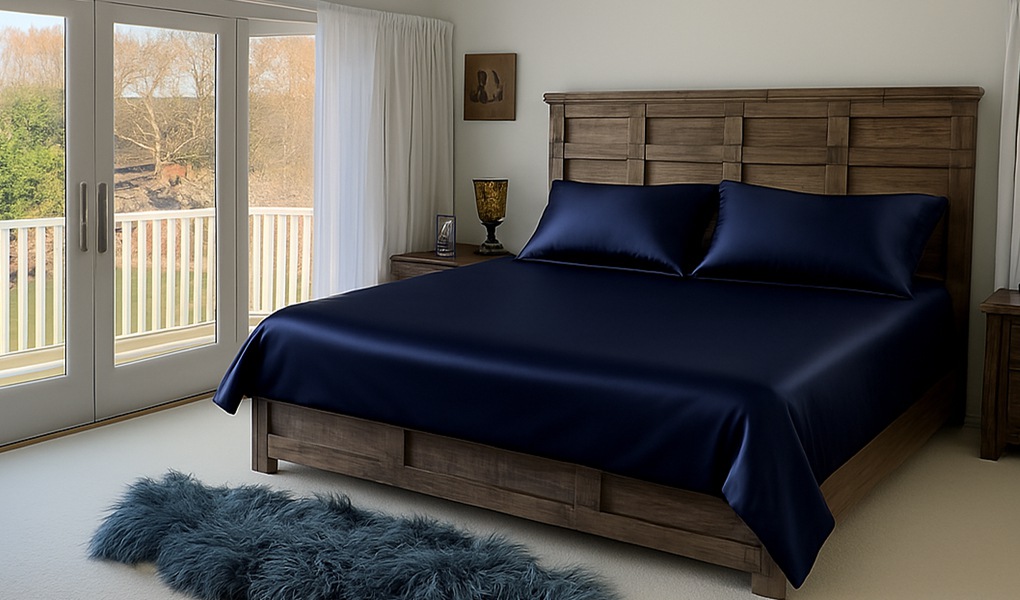
Pure mulberry silk bedding sets behave very differently from synthetics—not just in how they feel, but in how they interact with your skin.
Low friction
Silk’s protein-based structure is remarkably smooth, both to the touch and under the microscope. It glides over your skin without pulling or pressing. For people who sleep on their side or stomach, this reduces stress on the face, neck, and décolletage—some of the most delicate areas of skin.
Temperature regulation
Silk can absorb up to 30% of its weight in moisture without feeling damp. It naturally helps balance body temperature, keeping you cool in the heat and comfortably warm in the cold. That makes it ideal for year-round use, and especially valuable for those who sleep nude.
Naturally hypoallergenic
Silk resists dust mites, mold, and many common allergens without chemical treatment. It doesn’t need synthetic coatings to feel soft or fresh. That’s a relief for anyone with eczema, reactive skin, or sensitivities.
A Subtle Upgrade with Tangible Benefits
We’ve heard this story many times:
Someone starts with a silk pillowcase—often as a gift or a curiosity.
Within weeks, they notice fewer creases on their face, better skin texture, and a clearer sense of comfort when waking up.
Months later, they’ve upgraded their sheets, duvet cover, even their sleepwear—often turning to a full mulberry silk bedding set as part of a broader commitment to skin health and restorative sleep.
Silk doesn’t shout. It doesn’t sparkle. It just performs—quietly, consistently—night after night.
For people who sleep naked, this becomes even more apparent. You’re not just lying in bed. You’re wrapped in something that either supports your skin or slowly works against it.
Worth It? Depends on What You Value
A common argument is: “But silk is expensive.”
Yes, good silk bedding is an investment. But so are skincare, fragrance, tailored clothes—and none of them spend eight hours a night in direct contact with your bare skin.
Silk sheets don’t wrinkle your face. They don’t trap heat. They don’t ask your skin to compromise.
They simply do their job, while you sleep.
If you’ve chosen to sleep freely, maybe it’s time to let your skin feel the difference between artificial softness and natural harmony.