
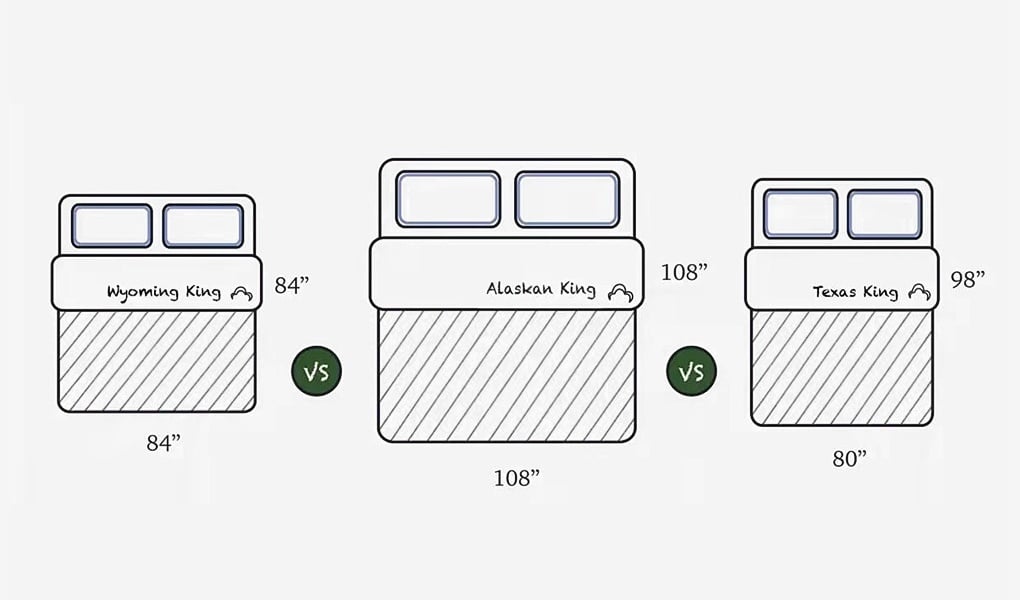
The Alaskan King is one of the largest standard mattress sizes available, measuring:
- 108 x 108 inches (approximately 274 x 274 cm)
Due to its exceptional size, most ready-made fitted sheets do not provide sufficient coverage—especially for deep pocket mattresses (e.g., 16 inches or around 40.6 cm in pocket depth). As a result, custom-made fitted sheets are essential. And in such cases, seams are not only expected—they are structurally necessary.
Fabric width limitations make seaming unavoidable
The widest premium silk sheeting fabric available today is offered by ElleSilk, with a maximum usable width of:
- 110 inches (approximately 279 cm)
This is already the highest standard in the industry.. However, it is still not wide enough to cut a single piece that covers both the mattress surface and the required depth on all four sides, particularly when accounting for deep pockets. Therefore, panel construction with seams is standard practice when tailoring fitted sheets for oversized mattresses.
Fitted sheet dimensions (using a 16-inch pocket depth as an example)
To properly enclose the mattress with sufficient depth and tension, a fitted sheet should be cut to the following approximate dimensions:
- Length = 108 in + 2 × 16 in + seam allowance ≈ 142 in ≈ 360 cm
- Width = same ≈ 360 cm
- Pocket depth = 16 in ≈ 41 cm
If your mattress has a different pocket depth, these figures can be adjusted proportionally.
Seams are a standard part of oversized silk sheets
For many customers, the presence of seams may raise concerns about appearance or comfort. However, in professional bedding production—especially for oversized beds—panel seams are a standard and necessary part of the manufacturing process. What matters most is how those seams are positioned and finished:
- They should be placed away from the sleep surface
- They should be flat, secure, and visually unobtrusive
- The overall structure should remain symmetrical and durable
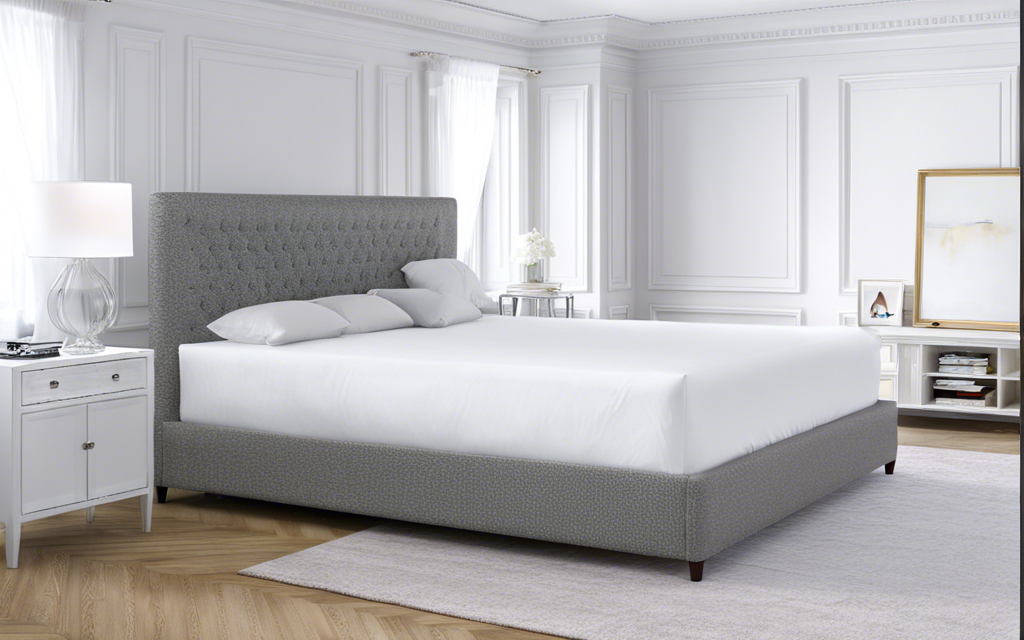
Recommended construction: three-panel layout (two sides and one end)
To avoid seams running through the center of the bed, we recommend a three-panel construction as follows:
1. Center panel
Cut a 279 × 279 cm square from the full fabric width. This central panel will cover the entire top surface of the mattress and extend slightly over the edges. It ensures that the part of the sheet most in contact with the sleeper is seamless and uninterrupted.
2. Side panels
Cut two additional panels, approximately 40 × 279 cm each, and attach them to the left and right sides of the center panel. These provide the extra depth needed to wrap around the mattress sides and corners. The seams will fall along the lower sidewalls, away from direct contact areas.
3. End panel
Attach a third panel of the same size (about 40 × 279 cm) to either the head or foot of the bed. We recommend placing it at the foot to keep the entire upper portion of the bed seamless and more visually unified.
Seam finishing recommendations
To maintain both aesthetic quality and structural durability, we recommend:
- Flat-felled seams or French seams for clean, reinforced edges
- Seam allowances that are trimmed and pressed flat to reduce bulk
- Stitching aligned carefully to avoid distortion or puckering
These methods are widely used in the luxury bedding customization process and result in strong, neat finishes that remain comfortable and durable over time.
When custom-making a fitted sheet for an Alaskan King bed, even the widest fabric on the market—such as ElleSilk’s 279 cm width—requires panel construction with seams. With a three-panel layout (two sides and one end), the seams can be positioned out of sight and away from high-contact areas, allowing the finished product to deliver:
- A seamless sleep surface
- A smooth and tailored fit
- Long-term structural reliability
In oversized bedding, seams are not a compromise—they are part of a well-executed, professional solution. With proper planning and finishing, a custom fitted sheet for an Alaskan King bed can look refined, feel luxurious, and perform exceptionally.