

You bought a comfortable new king size mattress but your old king fitted bed sheets keep slipping off. It isn’t that you don’t know how to make the bed—the fitted sheets are simply the wrong size.
Many people find that as soon as they move to a thicker, softer, better-built mattress, sheet trouble starts. Corners pop loose, edges sag, the sheet creeps to the middle of the bed during the night. The problem is not the brand you chose, and it’s not poor quality. The sheet was never made for the mattress you own now.
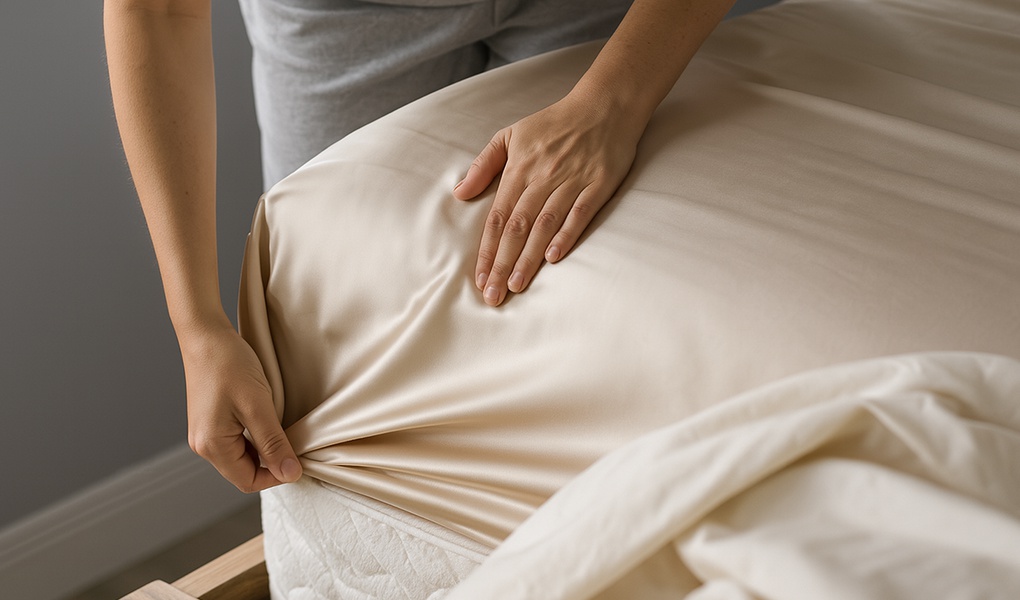
Modern mattresses keep getting thicker, while standard fitted sheets stay the same
Lots of today’s mattresses have extra layers: pillow-tops, Euro tops, memory-foam hybrids, or an adjustable base with a pad on top. It’s easy for the thickness to pass 30 cm (about 12 inches).
Most store-bought fitted sheets—even ones sold as “deep pocket”—were cut for depths up to about 35 cm, and that figure already counts the stretch of the elastic. The real cloth height is less. Add a protector or a featherbed and even a few extra centimeters can stop the sheet from gripping.
Silk and high-thread-count cotton: the nicer the fabric, the stricter the fit for fitted sheets
Silk, Tencel, and fine long-staple cotton feel great, but they hardly stretch at all. They won’t “give” the way jersey or blended knits do. Miss the size by even a centimeter or two and the fabric cannot lie flat on the mattress.
So a premium mattress plus a premium fabric can be the most likely pair to act up if the sheet size is off.
The size math: how to cut a sheet for a deep mattress
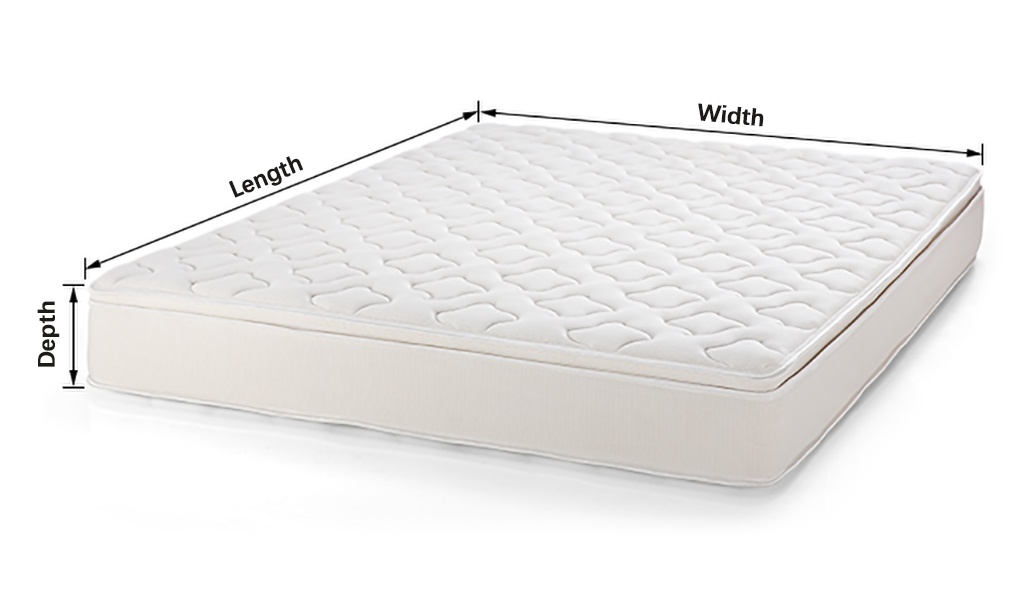
Take a real example. Your mattress is King size, 193 × 203 cm, and 30 cm thick. What should the sheet measure?
- Mattress top: 193 cm × 203 cm
- Corner drop: 30 cm thickness × 2 = 60 cm
- Safety allowance for movement and shrinkage: at least 10 cm
That gives us:
- Width: 193 + 60 + 10 = 263 cm
- Length: 203 + 60 + 10 = 273 cm
So the finished fabric should be 263 cm × 273 cm.
Most “standard King” sheets are only about 250 × 270 cm, and the corner height often falls short. That gap is why they keep working loose.
When the size is right, the fabric can do its job
People often think that strong elastic or an expensive fabric will make any sheet stay put. The truth is:
- Stretchy fabric is a backup plan, not a perfect fit.
- High-end fabric is not more forgiving; it actually needs precise sizing.
Many customers tell us they tried three or four sets of sheets and each one felt a bit off. Once they measured the mattress and ordered a custom cut, the slipping stopped. The issue was never the material—it was the fit from the very start.
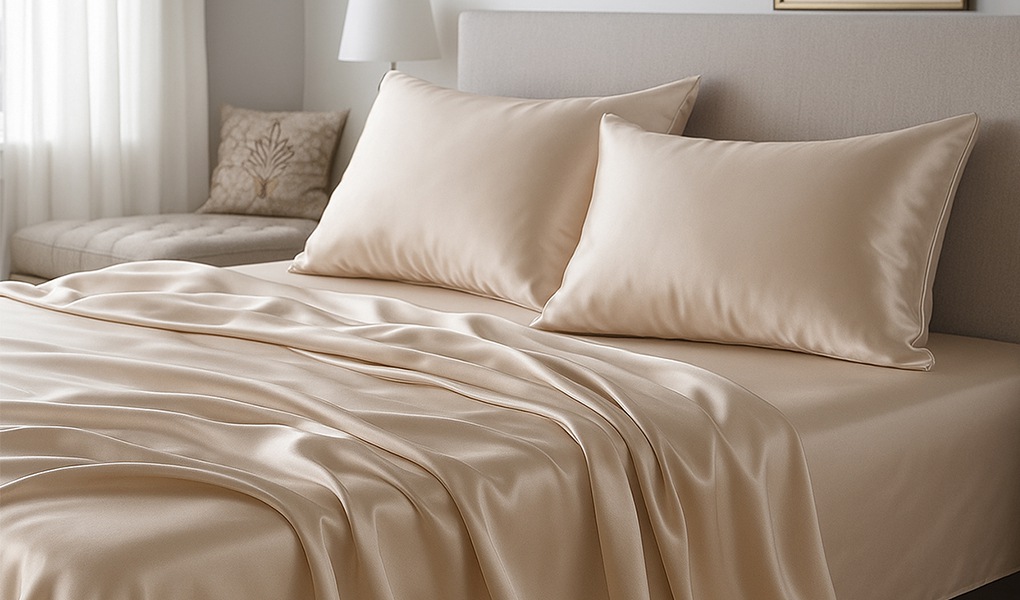
Custom sizing isn’t a luxury, it’s the basic way to fit
You don’t need fancy patterns or sky-high prices. Measure the mattress—length, width, depth—add the corner drop and the allowance, and cut the fabric according to the material you choose. The custom fitted sheet will stay on every night and look neat every morning.
That’s the work we handle all the time. Extra-thick mattresses, adjustable bases, rounded corners, protectors—give us the true numbers and we can solve the problem.
If you wake up to a bunched-up sheet, it isn’t that you move too much or tuck too little. You’re just asking a standard answer to fix a non-standard problem. Once the size is right, the sheet issue is a one-time fix that keeps paying off.