

Few textiles command instant respect from both fashion insiders and craft lovers the way Seiken silk does. Born in Japan and refined across centuries, this pure-silk fabric marries technical discipline with effortless grace. Designers treasure it for the way light plays across its surface; collectors prize it because a single roll can outlast a lifetime of changing trends.
What Sets Seiken Silk Apart
- Subtle glow, never glare
Unlike synthetics that bounce light back in loud flashes, Seiken silk reflects a muffled, almost candle-lit sheen—soft on the eye, flattering on the skin. - Tight, flawless weave
Master weavers pack hundreds of silk filaments into every square inch, producing a cloth that drapes like liquid yet stands up to decades of wear. - Colour honesty
The smooth fibres drink in dye, so shades appear rich and even. Whether a designer chooses hand-painting or modern digital printing, the result is vivid and true. - Strength beneath the softness
Free of sericin (the natural gum removed during processing), each strand stays supple but tough. A garment made today can be an heirloom tomorrow.
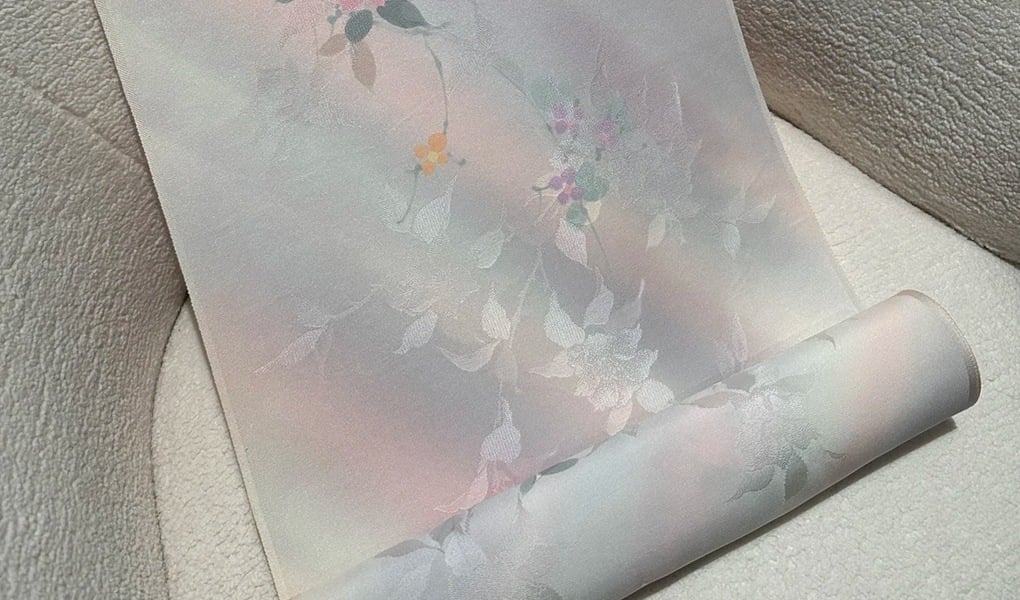
A Guide to the Main Varieties of Seiken Silk
| Name (Romanised) | Essence | Typical Use |
| Ro | Sheer, with tiny horizontal gaps for airflow | Summer dresses, warm-weather jackets |
| Tsumugi | Textured, almost cotton-like hand | Casual suits, everyday kimono reinventions |
| Tsukesage | Artwork spans the whole roll and lines up when sewn | Statement gowns, red-carpet pieces |
| Komon | Repeating micro-motif over the entire length | Versatile separates, relaxed tailoring |
| Hashaku | Shorter roll meant for outer layers | Light coats, fashion jackets |
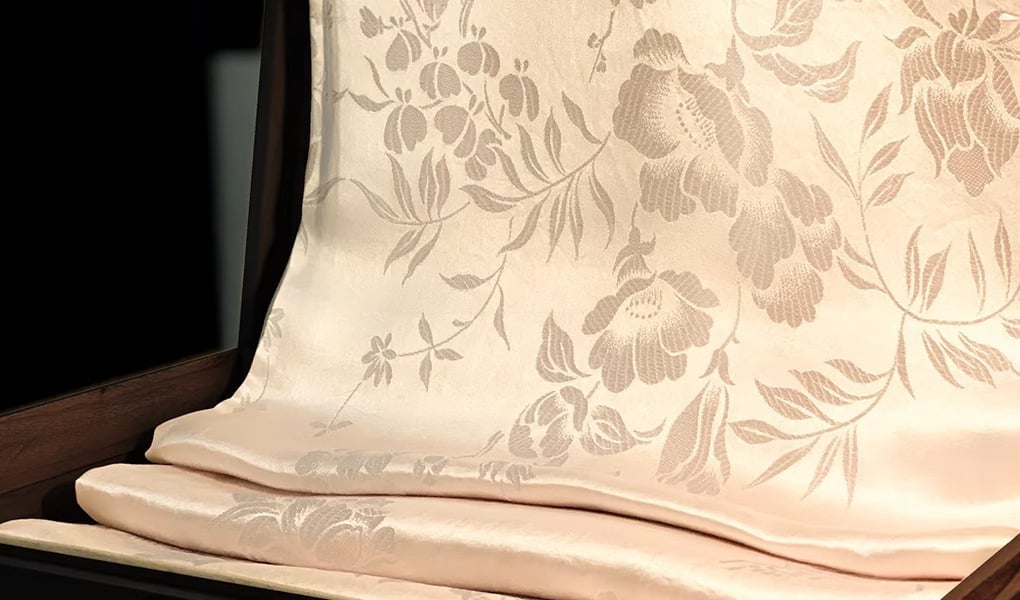
| Iromuji | One solid shade over a woven tone-on-tone pattern | Formalwear, minimalist bridal looks |
| Shirokiji | Pure white base for custom dye work | Bespoke projects, textile art |
| Tanmono | The full uncut roll (about 12–13 m) | Complete robes or large one-piece creations |
How Craft Becomes Cloth
- Cocoon selection and reeling – only the longest, cleanest filaments make the cut.
- Degumming – a gentle bath removes natural resin, unlocking the fibre’s trademark glow.
- Dyeing or patterning – either as loose yarn or finished cloth, depending on the design.
- Loom work – seasoned artisans control tension by feel, correcting even a single stray thread.
- Finishing touches – steam, press, and an eagle-eyed inspection ensure every centimetre is showroom ready.
Why It Matters Now
Global fashion is rediscovering slow textiles. Seiken silk answers that call: responsibly sourced, made by specialists, and adaptable to modern silhouettes—from sculptural evening dresses in Paris to contemporary qipao in New York. Interior designers stitch it into wall panels; sneaker brands sample it for limited-run uppers. Wherever precision and poetry intersect, Seiken finds an audience.
Silk will always evoke luxury, but Seiken goes further. It proves that luxury can be intelligent: engineered for beauty, built to survive, and finished by hands that believe perfection is not optional but expected. In an age of fast everything, that philosophy feels as fresh as the fabric itself.